
Engine Oil Filling Production Line: Complete 4L & 5L Lubricant Packaging System
A high-speed engine oil filling production line is not simply a filling machine connected to several conveyors.
At industrial production rates, empty-canister handling, filling control, cap feeding, coding, labeling, inspection, carton packing and pallet handling must operate as one coordinated system. If one process becomes unstable or cannot match the required speed, it can reduce the output of the complete production line.
This article explains how Shanghai GLZON Equipment Co., Ltd. configures an engine oil filling production line for 4L and 5L canisters, from empty-container preparation through net-weight filling, quality inspection, carton packing and final pallet handling.
The example production line uses a 12-head net-weight filling machine with fast and slow filling stages, vapor extraction and filling capacity of up to 2,500 bottles per hour.
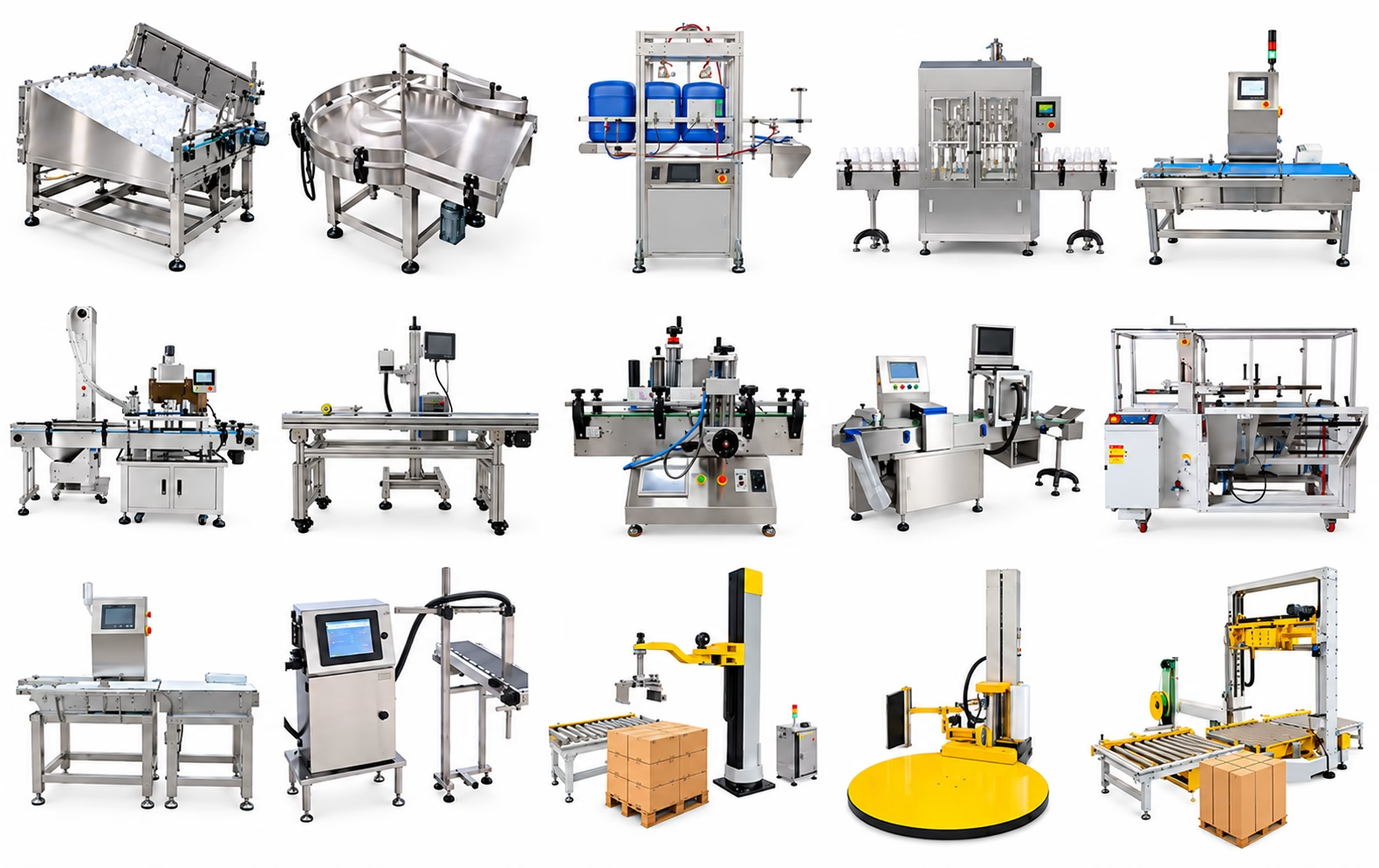
Example 4L & 5L Engine Oil Filling Line Configuration
| Parameter | Proposed Configuration |
| Product | Engine oil / lubricating oil |
| Container | Plastic canister |
| Filling volume | 4L and 5L |
| Filling method | Net-weight filling |
| Filling heads | 12 |
| Filling sequence | Fast filling + slow filling |
| Filling capacity | Up to 2,500 bottles/hour |
| Filling-area material | SS304 in the proposed configuration |
| Empty-container inspection | Automatic leak testing |
| Filled-container inspection | Checkweigher with automatic reject |
| Cap inspection | Cap presence monitoring |
| Label and code inspection | Vision inspection |
| Secondary packaging | Automatic carton packing |
| Carton inspection | Carton checkweigher |
| End-of-line system | Robotic palletizing + stretch wrapping + pallet strapping |
A complete engine oil filling production line should be engineered around the actual lubricant, bottle, cap, label, carton, pallet and factory conditions rather than selected only from the nominal bottle volume.
How an Engine Oil Filling Production Line Works
For engineering purposes, the production line can be divided into four main functional zones. This approach allows the complete lubricant filling and packaging line to be evaluated as one production system rather than a group of independent machines.
Zone 1 – Empty Container Preparation
Canister Buffer Storage → Automatic Sorting → Empty Canister Leak Testing
Zone 2 – Primary Packaging
Net-Weight Filling → Filled-Canister Checkweighing → Cap Placement & Capping
Zone 3 – Identification & Quality Inspection
Laser Coding → Automatic Labeling → Vision Inspection
Zone 4 – Secondary & End-of-Line Packaging
Carton Packing → Carton Checkweighing → Carton Printing → Robotic Palletizing → Stretch Wrapping → Pallet Strapping
1. Canister Buffer Storage: Maintaining Stable Production
The production process begins before engine oil reaches the filling machine. Empty plastic canisters may arrive from an upstream blow-molding process or may be supplied separately. Feeding them directly into a high-speed filling machine without sufficient accumulation can cause unnecessary production interruptions.
The canister buffer provides controlled storage between empty-container supply and the downstream production line. In this configuration, the buffer can hold up to 500 canisters, with its discharge speed matched to the production line.
The canister-contact deck and guides are designed with SS304, while the supporting structure can use painted carbon steel.
Why Is a Buffer Important?
A buffer is not simply a storage table. It helps separate short interruptions between different sections of the production line. For example, if the upstream canister supply temporarily slows down, sufficient accumulated containers may allow the filling section to continue operating rather than stopping immediately.
In high-speed packaging lines, effective accumulation is an important part of production-line balancing.
2. Automatic Canister Sorting and Orientation
After accumulation, the empty canisters must be correctly oriented and transferred into a controlled single-lane flow.
- Sort the canisters
- Correct their orientation
- Meter the containers into the production line
- Provide stable container spacing for downstream equipment
Correct orientation is important because subsequent machines depend on predictable container positioning. This includes filling nozzles, capping equipment, labeling machines, coding systems and vision inspection stations.
The proposed sorting system is designed to support a production line of approximately 2,500 bottles per hour, subject to the final approved canister design.
3. Automatic Empty-Canister Leak Testing
Quality control should begin before engine oil is filled. Plastic containers can develop small defects during molding, transport or handling. If a defective container enters the filling process, lubricant may be wasted and leakage may later occur during warehousing, transportation or customer use.
The automatic canister leak tester checks empty containers before filling. If a container does not meet the programmed test requirements, it can be automatically removed from normal production flow.
Empty Canister → Leak Test → Qualified Container → Filling
Testing containers before filling can help prevent valuable lubricant from being filled into defective packaging.
4. 12-Head Net-Weight Engine Oil Filling Machine
The filling machine is the central dosing system of the production line. For this project, the proposed engine oil filling machine uses 12 filling heads to fill 4L and 5L lubricant canisters by net weight.
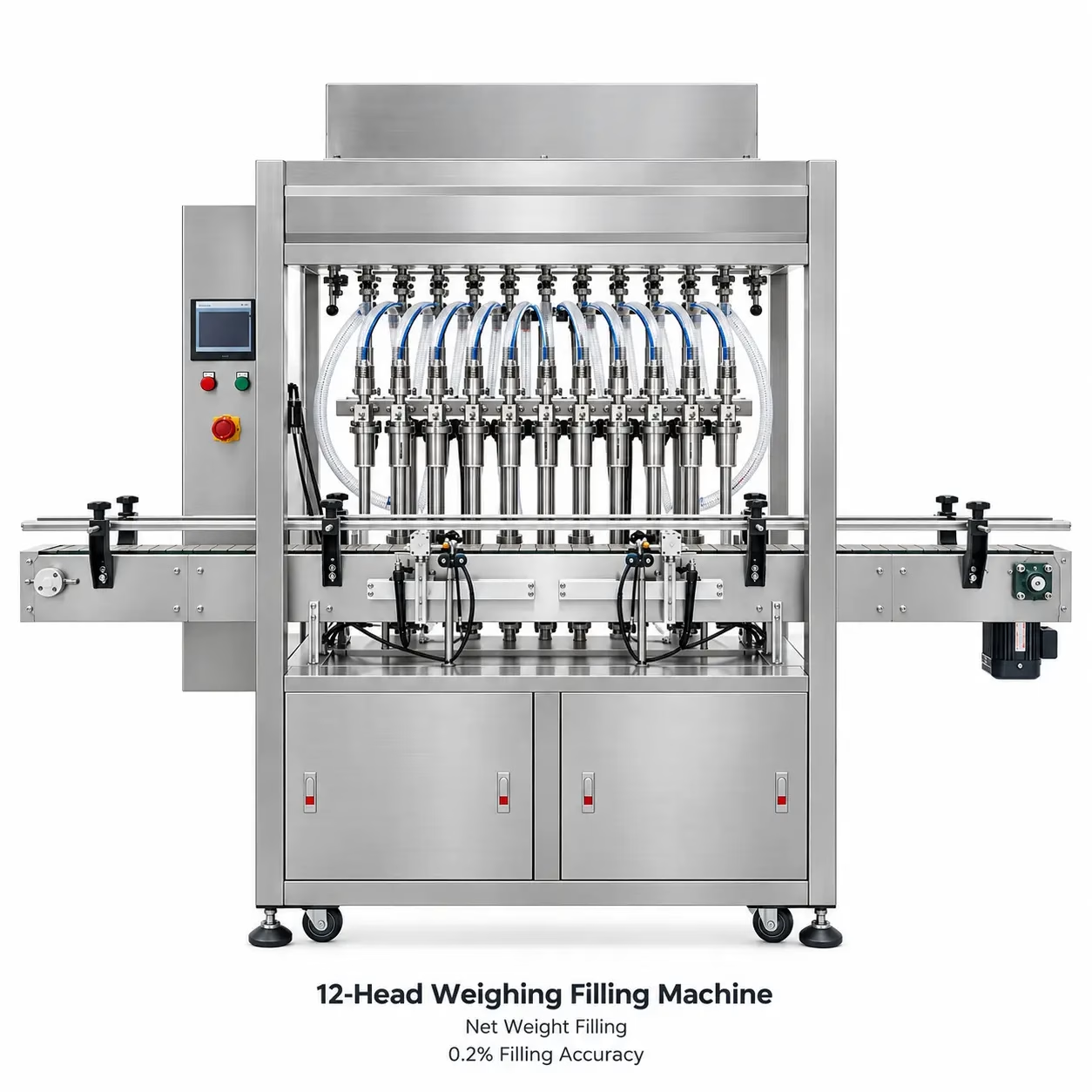
Fast Filling → Slow Filling → Target Weight
During the first stage, lubricant is delivered at a higher flow rate to reduce the filling cycle time. As the measured weight approaches the programmed target, the system changes to a lower filling rate.
The slow-filling stage helps control the final dosing process and reduce excessive overshoot before the target weight is reached.
The proposed 12-head configuration has a filling capacity of up to 2,500 bottles/hour.
- SS304 product-contact parts
- Stainless-steel filling nozzles
- SS304 filling-area enclosure
- Automatic weighing control
- Fast and slow filling stages
- Vapor extraction
Why Use Net-Weight Filling for Engine Oil?
Net-weight filling directly measures the product mass during the filling process. This approach is suitable for industrial lubricant applications where controlled filling quantity is important.
Unlike a simple time-based filling process, the weighing controller works toward a programmed product-weight target. A downstream checkweigher can then provide an independent inspection after filling.
Filling Machine = Dosing Control | Checkweigher = Independent Filled-Container Verification
In practical net-weight filling applications, the weight variation of empty plastic containers should also be considered when configuring the filling process. The final tare-handling method should be confirmed according to the customer’s container characteristics and production requirements.
5. Why Engine Oil Viscosity Matters
A 4L or 5L filling volume alone is not enough information to select the correct lubricant filling machine. Engine oils and industrial lubricants can have different viscosities and flow characteristics. Product temperature can also affect viscosity.
As a result, the actual lubricant characteristics can influence:
- Filling speed
- Nozzle diameter
- Filling valve size
- Pump selection
- Pipe diameter
- Product feeding pressure
- Filling cycle time
- Drip control
Before finalizing an automatic lubricant filling line, the following product information should be confirmed:
- Lubricant type
- Viscosity at filling temperature
- Product density
- Filling temperature
- Foaming or aeration behavior
- Product supply pressure
- Storage tank position
- Required cleaning method
- Product-contact material requirements
A professional filling-line design should therefore begin with both the product characteristics and packaging characteristics.
6. Vapor Extraction During Filling
The proposed filling system also includes vapor extraction around the filling area. This demonstrates an important principle in industrial filling-machine design.
Filling equipment should not be selected only according to:
- Bottle size
- Filling volume
- Number of nozzles
- Required bottles per hour
The production environment and product characteristics should also be evaluated. Depending on the lubricant and production conditions, filling-area ventilation, extraction or other environmental controls may need to be considered during project engineering.
7. Filled-Canister Checkweigher and Automatic Reject
After filling, each canister passes through an independent checkweighing station. The checkweigher compares the container weight against programmed upper and lower limits.
If the measured weight falls outside the accepted range, the non-conforming canister can be automatically rejected.
Net-Weight Filling → Independent Checkweighing → Automatic Reject
This is different from relying only on the filling machine’s internal weighing system. The filling machine controls the dosing operation, while the downstream checkweigher verifies the finished canister independently.
For high-volume engine oil packaging lines, this additional inspection point provides another layer of process control.
8. Automatic Cap Feeding, Placement and Capping
After the correct filling quantity has been verified, the canister must be securely closed.
Cap Feeding → Cap Sorting → Cap Placement → Cap Tightening
The proposed machine also includes cap-presence monitoring. The final capping capacity depends on the actual cap and bottle-neck design.
For this reason, customers should provide:
- Actual cap samples
- Bottle-neck samples
- Cap drawings
- Bottle drawings
The capping system should be confirmed around the real package rather than selected only according to bottle volume. A 5L bottle from one lubricant manufacturer may use a very different cap from another manufacturer’s 5L bottle.
9. Industrial Laser Coding and Product Traceability
After capping, product information can be applied to the canister using an industrial laser marking system.
- Batch number
- Production date
- Expiry date
- Production code
- Traceability code
The marking position, character size and required information should be confirmed according to the customer’s packaging design.
Traceability becomes particularly important when lubricant manufacturers operate multiple lubricant grades, production batches, markets or packaging formats.
10. Automatic Engine Oil Canister Labeling
The automatic labeling machine positions and applies labels to the canister during continuous production. Accurate labeling depends on more than the labeling machine itself.
The system must maintain stable:
- Bottle orientation
- Bottle spacing
- Conveyor movement
- Label feeding
- Label positioning
Final labeling speed depends on the container geometry and label dimensions.
For proper engineering, the customer should provide:
- Bottle drawings
- Bottle samples
- Label dimensions
- Label material
- Required label position
A labeler should therefore be configured after the actual canister and label design have been confirmed.
11. Vision Inspection System
At high production speeds, relying completely on manual inspection can become difficult and inconsistent. A machine-vision system provides repeatable inspection based on predefined criteria.
The proposed vision inspection system can inspect:
- Printed information
- Codes
- Visible packaging appearance
- Label quality
If a predefined defect is detected, the inspection system can issue a reject signal or stop signal. The exact inspection criteria must be agreed before final system configuration.
For example, a customer may want to check:
- Missing labels
- Incorrect label position
- Unreadable codes
- Missing printing
- Incorrect printing
- Visible packaging defects
A vision system becomes most useful when the required defect criteria are clearly defined before commissioning.
Quality Control in an Engine Oil Filling Production Line
One of the most important features of a complete engine oil filling and packaging line is that quality inspection can occur at multiple production stages.
| Production Stage | Quality-Control Function |
| Before filling | Empty-canister leak detection |
| During filling | Weight-controlled dosing |
| After filling | Filled-canister checkweighing |
| During capping | Cap-presence monitoring |
| After coding and labeling | Vision inspection |
| After carton packing | Carton checkweighing |
This creates a layered quality-control architecture. Instead of relying on one final inspection, potential defects can be detected closer to the process where they occur.
12. Automatic Carton Box Packing
After the individual engine oil canisters are filled, capped, coded, labeled and inspected, they can enter the secondary packaging section.
The automatic carton packing machine groups the finished canisters and loads them into the approved carton configuration.
The final machine arrangement depends on:
- Number of bottles per carton
- Bottle dimensions
- Carton dimensions
- Bottle orientation
- Carton packing pattern
- Required production rate
Secondary packaging should therefore be considered during the original production-line design rather than added later without checking capacity compatibility.
13. Carton Checkweigher and Reject System
Quality inspection continues after carton packing. The carton checkweigher measures the complete carton gross weight.
If the carton weight falls outside programmed limits, the carton can be automatically rejected. This provides another inspection layer before the product reaches warehousing or palletizing.
14. Large-Character Carton Inkjet Printing
After carton packing, an industrial inkjet printer can apply logistics and production information directly to the carton.
- Batch number
- Production date
- Lot number
- Shipping information
- Warehouse identification
- Product identification
Container-level coding and carton-level coding serve different purposes. The first identifies the individual lubricant package, while the second can support warehouse, logistics and distribution management.
15. Automatic Robotic Palletizing
At high production rates, repeated manual carton stacking can become labor-intensive. The robotic palletizing system automatically creates programmed carton patterns and stacks completed cartons onto pallets.
The palletizer configuration depends on:
- Carton dimensions
- Carton weight
- Cartons per layer
- Number of layers
- Pallet dimensions
- Required pallet pattern
- Production speed
Customized robot tooling is selected according to the actual carton and required handling method. The palletizing system should therefore be designed around the real packaging configuration rather than selected only according to robot payload.
16. Automatic Pallet Stretch Wrapping
After palletizing, the completed load can be automatically wrapped with stretch film.
- Warehouse handling
- Forklift transport
- Loading
- Transportation
The required wrapping program depends on pallet height, pallet dimensions, load stability and transportation requirements.
17. Automatic Pallet Strapping
The final pallet can also pass through an automatic strapping system. The machine applies straps according to the required direction and quantity.
Final configuration depends on:
- Pallet dimensions
- Pallet height
- Number of straps
- Strap direction
- Required production capacity
The finished pallet is then prepared for downstream warehouse handling and shipment.
How to Understand 2,500 Bottles/Hour in an Engine Oil Filling Production Line
One of the most common mistakes in production-line planning is assuming that a filling machine rated at 2,500 bottles/hour automatically means the complete factory will continuously produce 2,500 finished bottles/hour.
This is not necessarily the case. The real production capacity is affected by the complete line, including:
- Filling-machine cycle time
- Canister supply
- Container stability
- Cap feeding
- Capping speed
- Labeling speed
- Inspection cycle
- Carton packing
- Palletizing
- Product changeover
- Machine stoppages
- Buffer capacity
The slowest synchronized process can become the bottleneck of the entire engine oil filling production line. Therefore, complete-line engineering should evaluate each machine against the required production capacity.
Filling machine capacity and complete-line capacity are not always the same.
For this example project, the proposed 12-head filling machine is rated for up to 2,500 bottles/hour. The final sustained production-line output should be confirmed after the complete packaging configuration has been approved.
Handling Different 4L and 5L Canisters
A production line designed for both 4L and 5L packages may require adjustments at several stations.
Depending on the difference between the two canister formats, changeover may involve:
- Conveyor guide adjustment
- Filling-nozzle position
- Container stopping position
- Capping-head adjustment
- Cap feeder adjustment
- Label position
- Labeling recipe
- Vision-inspection recipe
- Carton packing pattern
- Palletizing program
If two containers have similar dimensions, changeover may be relatively simple. If their shapes, necks, caps and cartons are substantially different, additional adjustment or change parts may be required.
Therefore, the actual 4L and 5L bottle samples should be evaluated before the final production-line design is confirmed.
Control System and Industrial Components
A complete engine oil packaging line should also be considered as one integrated automation system.
The proposed line can use industrial components including:
- Siemens or equivalent PLC
- Siemens or equivalent HMI touchscreen
- Panasonic servo motors
- Schneider VFD
- Omron sensors
- SMC pneumatic components
- Airtac solenoid valves
- Schneider electrical components
- SKF / NSK bearings
- Rexnord / Habasit conveyor components
Product-contact materials can be selected from SS304 or SS316 according to application requirements. For this example engine oil project, SS304 is used in relevant filling and canister-contact areas.
The final brands and component specifications should be confirmed during project engineering because customer standards and local project requirements can differ.
For projects supplied to the European Union, the final machinery design and documentation should be reviewed against applicable requirements, including Regulation (EU) 2023/1230 on machinery.
Factory Layout for an Engine Oil Filling Production Line
Selecting the correct machines is only one part of designing an efficient lubricant packaging plant. The physical layout also affects line performance, accessibility and future maintenance.
Important layout considerations include:
- Available factory floor space
- Straight, L-shaped or U-shaped conveyor arrangement
- Operator working areas
- Maintenance access
- Electrical cabinet positions
- Compressed-air supply
- Lubricant storage tank location
- Product piping
- Empty-canister loading area
- Finished-pallet discharge area
- Forklift traffic
- Warehouse access
- Machine safety zones
- Ceiling height
Before finalizing a complete production line, we recommend providing a factory layout drawing whenever possible. This allows the conveyor route and machine arrangement to be evaluated around the customer’s real production space.
Information Required to Design an Engine Oil Filling Production Line
A professional quotation should not begin only with “I need a 5L oil filling machine.” For complete-line engineering, much more information is useful.
| Customer Information | Why It Matters |
| Product name | Establishes the application |
| Product density | Supports weight and filling calculations |
| Product viscosity | Influences pump, pipe, valve and nozzle design |
| Filling temperature | Can affect lubricant viscosity |
| Canister volume | Determines filling range |
| Canister dimensions | Required for guides and machine configuration |
| Bottle sample | Recommended for practical testing |
| Neck diameter | Important for filling-nozzle design |
| Cap sample or drawing | Required for cap feeding and capping |
| Label dimensions | Required for labeling-machine configuration |
| Label position | Determines applicator setup |
| Carton dimensions | Required for carton packing |
| Bottles per carton | Determines carton packing pattern |
| Pallet dimensions | Required for palletizing |
| Cartons per layer | Required for robot programming |
| Target bottles/hour | Determines line capacity |
| Factory layout | Determines conveyor arrangement |
| Electrical supply | Required for machine configuration |
| Compressed-air supply | Required for pneumatic equipment |
| Product supply tank details | Required for pump and piping design |
| Inspection requirements | Required for vision and checkweigher configuration |
Providing this information helps engineers design the complete system around the actual production process.
Common Mistakes When Selecting an Engine Oil Filling Production Line
1. Choosing a Filling Machine Only by Bottle Volume
Two products can both use 5L bottles but require very different filling equipment because their viscosity, flow behavior and production requirements are different.
2. Ignoring Product Viscosity
Viscosity affects filling speed, nozzle selection, valve size, pump requirements and piping.
3. Specifying Filling Speed Without Checking Downstream Machines
A fast filling machine cannot deliver its full production potential if the capping, labeling or carton-packing section becomes the bottleneck.
4. Selecting a Capping Machine Without Real Cap Samples
Cap dimensions, material, thread design and bottle neck all affect capping-machine design.
5. Selecting a Labeler Before Finalizing the Package
Container shape and label size should be confirmed before the labeling system is finalized.
6. Ignoring Buffer and Accumulation Requirements
Short upstream or downstream disturbances can stop the entire line if no accumulation strategy is provided.
7. Treating Palletizing as a Separate Project
Palletizing capacity should be calculated according to the carton output of the complete packaging line.
8. Assuming Nominal Machine Speed Equals Actual Production Output
Sustained production depends on the entire system rather than one machine specification.
9. Failing to Define Inspection Criteria
Vision inspection and automatic rejection work best when acceptable and unacceptable conditions are clearly defined before commissioning.
When Is a 12-Head Filler Appropriate for an Engine Oil Filling Production Line?
A 12-head filler can be suitable when the required production capacity is high enough that fewer filling positions would create an excessive filling cycle.
However, the correct number of filling heads cannot be selected only from the required bottles/hour.
Important factors include:
- Filling volume
- Lubricant viscosity
- Product flow rate
- Nozzle flow capacity
- Filling target
- Required filling control
- Container indexing time
- Total production capacity
The 12-head configuration described in this article is therefore an example project configuration, not a universal requirement for every 4L or 5L lubricant production line.
Why Complete-Line Integration Matters
A complete engine oil filling production line should be designed as one coordinated production system, with filling, closure, inspection, carton packing and pallet handling balanced around the required output.
The engineering team should evaluate questions such as:
- Can each downstream machine accept the upstream output?
- Where should accumulation be provided?
- What happens if one machine temporarily stops?
- Which defects should cause rejection?
- Which faults should stop the line?
- How will different canisters be changed over?
- How will operators access the machines?
- Is sufficient maintenance space available?
- Can the palletizing section handle the carton output?
- Is the product supply system capable of maintaining the required filling rate?
These questions are often more important than simply comparing the nominal speed of individual machines.
From Engine Oil Filling to Complete Lubricant Packaging
Shanghai GLZON Equipment Co., Ltd. specializes in industrial weighing, filling and packaging equipment.
Our equipment range includes solutions for:
- Engine oil filling
- Lubricant filling
- Bottle and canister filling
- Pail filling
- Drum filling
- IBC filling
- Automatic capping
- Labeling
- Checkweighing
- Inspection
- Carton packaging
- Palletizing
- Industrial weighing systems
For complete lubricant projects, our objective is to evaluate the entire production path:
For related liquid-packaging equipment, see our automatic filling machine solutions.
Empty Container → Inspection → Filling → Weight Verification → Capping → Coding → Labeling → Vision Inspection → Carton Packing → Carton Inspection → Palletizing → Final Pallet Packaging
The filling machine should not be treated as an isolated piece of equipment.
Frequently Asked Questions
What container sizes can an engine oil filling production line handle?
The example production line is designed around 4L and 5L plastic engine oil canisters. Other container sizes can be evaluated according to the customer’s packaging requirements.
What is the filling capacity?
The proposed 12-head net-weight filling machine has a filling capacity of up to 2,500 bottles per hour. Actual complete-line output depends on the performance and configuration of all upstream and downstream equipment.
What filling method is used?
The proposed system uses net-weight filling with fast and slow filling stages.
Can incorrect fills be automatically rejected?
Yes. The line includes a filled-canister checkweigher that compares each container against programmed weight limits and rejects non-conforming units.
Can the system inspect empty bottles before filling?
Yes. An automatic leak tester checks empty canisters before filling and rejects defective containers.
Does the line automatically place and tighten caps?
Yes. The proposed system includes automatic cap feeding, sorting, placement and capping, together with cap-presence monitoring.
Can the system inspect labels and printed information?
Yes. The proposed vision system can inspect printed information, codes, packaging appearance and label quality according to predefined inspection criteria.
Does the production line include carton packing?
Yes. The complete proposed line includes automatic carton packing and carton checkweighing.
Does the system include palletizing?
Yes. The end-of-line configuration includes robotic palletizing, pallet stretch wrapping and pallet strapping.
Can the line handle different lubricant products?
The production line can be configured according to the actual lubricant characteristics. Product viscosity, density, temperature, material compatibility and cleaning requirements should be evaluated before the final equipment configuration is confirmed.
Planning an Engine Oil Filling Production Line?
If you are developing a new engine oil filling production line, expanding lubricant production or replacing manual packaging equipment with an automated system, send our engineering team the following information:
- Product specification
- Product viscosity and density
- Filling temperature
- Canister drawings or samples
- Cap drawings or samples
- Label dimensions
- Carton dimensions
- Bottles per carton
- Required bottles per hour
- Pallet dimensions and pallet pattern
- Factory layout
- Available electrical and compressed-air supply
Shanghai GLZON Equipment Co., Ltd. can then evaluate the complete process from empty-canister handling and filling to quality inspection, carton packing and pallet handling and propose an equipment configuration based on the actual production requirements.