
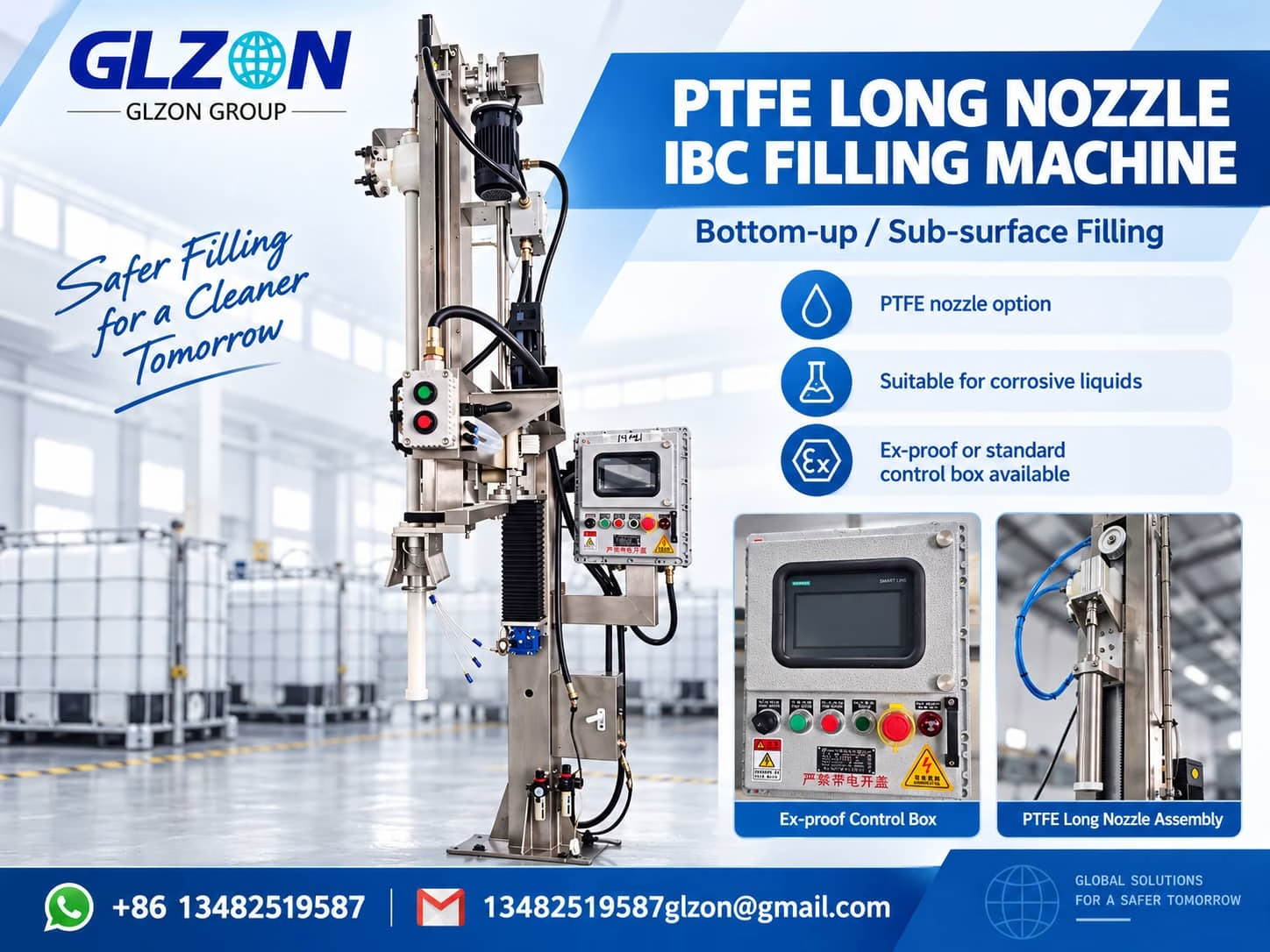
An IBC filling machine helps manufacturers fill industrial liquids into Intermediate Bulk Containers accurately and efficiently. Common container sizes include 500 L, 800 L, and 1000 L IBC totes.
However, choosing the right IBC filling equipment involves more than selecting a container size. The filling system should also match the liquid’s density, viscosity, temperature, corrosiveness, foaming behavior, and flammability.
Therefore, GLZON provides different IBC filling system setups for chemicals, lubricants, acids, solvents, detergents, coatings, resins, and other industrial liquids.
Depending on the application, the machine can include:
- SUS304, SUS316, or SUS316L wetted parts
- PTFE filling nozzle and chemical-resistant parts
- Long filling nozzle
- Bottom-up filling
- Sub-surface filling
- Weighing-based filling control
- Fast and slow filling
- Anti-drip nozzle
- PLC and HMI control
- Standard control box
- Explosion-proof control system
- Grounding and anti-static protection
- Roller conveyor
- Pump feeding system
- Drum and IBC filling options
As a result, buyers can select the machine according to both the liquid and the production area.
What Is an IBC Filling Machine?
An IBC filling machine, also called an IBC filler, IBC filling system, IBC filling equipment, or tote filling machine, fills a preset amount of liquid into an Intermediate Bulk Container.
Manufacturers commonly use IBC totes for:
- Industrial chemicals
- Lubricating oil
- Engine oil
- Hydraulic oil
- Gear oil
- Paint
- Coatings
- Resin
- Adhesives
- Detergents
- Cleaning chemicals
- Acids
- Alkalis
- Solvents
- Pesticides
- Specialty chemicals
For many industrial applications, a weighing system gives better filling control.
Load cells support the IBC and measure the actual filling weight. Meanwhile, the control system checks the weight continuously and stops the filling process when it reaches the preset target.
As a result, manufacturers can fill large containers with better repeatability.
IBC Filling Machine for 1000L Tote
The 1000 L IBC tote is widely used in chemical, lubricant, coating, and industrial liquid production.
However, every liquid has a different density. Therefore, the same IBC container may require different target weights.
For example, a 1000 L IBC may contain:
- Lubricating oil
- Detergent
- Resin
- Solvent
- Chemical solution
- Acid
- Coating material
Because these products have different densities, weighing-based filling can provide better control than relying only on volume.
First, the operator enters the target weight through the HMI. Next, the weighing system measures the product during filling.
A typical filling sequence is:
Tare → Fast Filling → Slow Filling → Final Weight Control → Stop Filling
Therefore, the same 1000L IBC filling machine can handle different liquids when the machine materials and filling settings suit the product.
Why Use a Long Nozzle for IBC Filling?
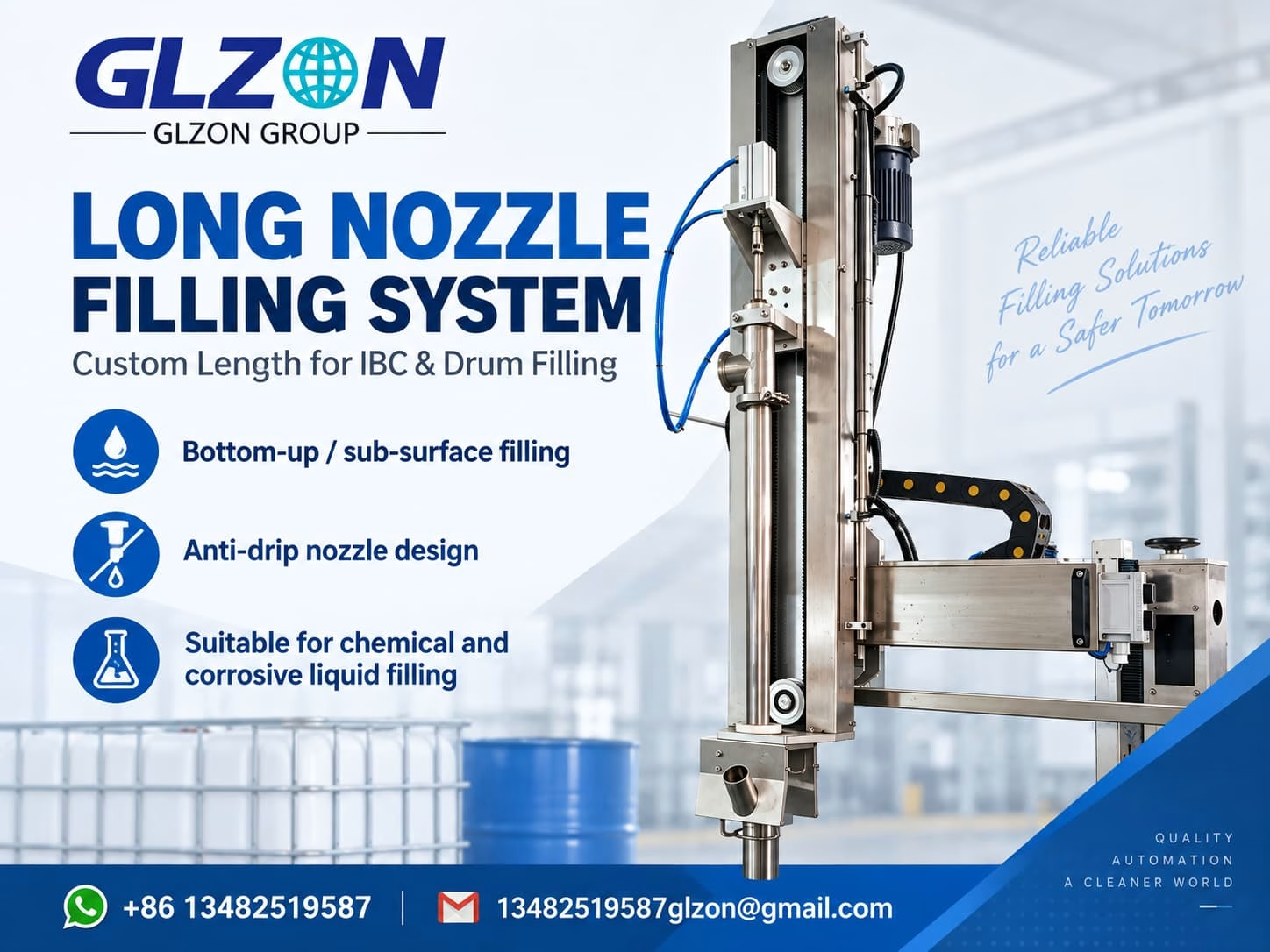
A long filling nozzle is an important option for many chemical IBC filling applications.
A standard short nozzle fills from the top of the container. However, when liquid falls from the top of a large empty IBC, it may create:
- Splashing
- Turbulence
- Foam
- Product agitation
- Vapor release
- Contamination around the opening
For this reason, a long nozzle moves the filling point deeper inside the container.
Depending on the process, buyers may also know this method as:
- Long-nozzle filling
- Diving nozzle filling
- Bottom-up filling
- Sub-surface filling
- Rising-lance filling
How Does Bottom-Up IBC Filling Work?
First, the long nozzle moves downward into the IBC.
Next, filling starts close to the bottom of the container.
As the liquid level rises, the nozzle gradually moves upward. Therefore, the outlet stays closer to the liquid surface.
As a result, the filling process can become smoother and easier to control.
Long Nozzle Helps Reduce Splashing
IBC containers are much deeper than bottles, pails, or small drums.
If the machine fills from the top, the liquid may hit the bottom of the empty IBC with high force.
For chemical applications, this may lead to:
- Product loss
- Dirty containers
- Operator exposure
- Contamination around the filling station
Therefore, a long nozzle reduces the free-fall distance and helps control splashing.
Long Nozzle Helps Control Foam
Some industrial liquids create foam when strong agitation occurs.
For example, foam-sensitive products may include:
- Laundry detergent
- Liquid cleaner
- Surfactant products
- Water-based chemicals
- Certain coatings
- Other foaming liquids
Excess foam can slow production because operators may need to wait for the foam to settle.
In contrast, sub-surface filling reduces liquid movement. As a result, it can help control foam during filling.
Long Nozzle for Volatile Chemicals
Volatile liquids may release more vapor when strong agitation occurs.
Therefore, controlled bottom-up filling can help reduce unnecessary liquid movement.
Typical applications may include:
- Solvents
- Alcohols
- Thinners
- Cleaning chemicals
- Specialty chemicals
However, a long nozzle alone does not make the machine explosion-proof.
If the product is flammable, the complete machine and filling area may also require suitable hazardous-area protection.
SUS316 IBC Filling Nozzle
For many industrial liquids, SUS316 or SUS316L stainless steel can provide a strong and durable product-contact system.
Typical wetted parts may include:
- Filling nozzle
- Pipeline
- Product valve
- Pump
- Hose fittings
- Manifold
- Connectors
In addition, SUS316 provides good corrosion resistance and high mechanical strength for many filling applications.
What Products Can Use a SUS316 Filling System?
Depending on the exact product, SUS316 may suit:
- Engine oil
- Motor oil
- Lubricating oil
- Hydraulic oil
- Gear oil
- Transformer oil
- Resin
- Adhesive
- Paint
- Coating
- Ink
- Detergent
- Cleaning liquid
- Industrial additives
- Water-based chemicals
- Many general chemical liquids
For these products, a stainless-steel IBC filling machine can provide good durability and easy maintenance.
However, SUS316 does not suit every chemical.
Therefore, buyers should always check the chemical name, concentration, and temperature before confirming the wetted parts.
Why Use a PTFE Filling Nozzle?
Some aggressive chemicals can attack stainless steel and other common materials.
For this reason, GLZON can use PTFE wetted parts when the application needs stronger chemical resistance.
Depending on the process, PTFE may be used for:
- Filling nozzle
- Nozzle lining
- Valve lining
- Pipeline lining
- Gaskets
- Seals
- Hose lining
- Pump parts
- Chemical-contact fittings
Therefore, a PTFE filling nozzle can be useful for highly corrosive and aggressive chemical applications.
However, the nozzle is only one part of the liquid path.
The pump, valves, hoses, seals, and pipelines must also match the product.
SUS316 vs PTFE Filling Nozzle
The right material depends on the liquid and operating conditions.
| Application | SUS316 / SUS316L | PTFE |
|---|---|---|
| Engine oil | Suitable | Usually unnecessary |
| Lubricating oil | Suitable | Usually unnecessary |
| Hydraulic oil | Suitable | Usually unnecessary |
| General industrial liquids | Often suitable | Application dependent |
| Paint and coatings | Often suitable | Application dependent |
| Detergents | Often suitable | Useful for aggressive formulas |
| General chemicals | Often suitable | Depends on chemical |
| Strong acids | Compatibility check needed | Often considered |
| Corrosive liquids | May not be suitable | Often preferred |
| Strong oxidizers | Requires review | Often considered |
| Solvents | Product dependent | Broad compatibility |
| Mechanical strength | High | Lower than stainless steel |
| Chemical resistance | Good for many liquids | Very broad |
Therefore, there is no universal answer that SUS316 or PTFE is always better.
Instead, buyers should consider:
- Chemical name
- Chemical concentration
- Product temperature
- Density
- Viscosity
- Pressure
- Filling speed
- Cleaning method
As a result, final material selection should follow the actual product data rather than only the product category.
PTFE Nozzle for Acid Filling Machines
PTFE wetted parts are often considered for aggressive chemical applications.
For example, these applications may include:
- Acids
- Alkalis
- Oxidizing chemicals
- Corrosive solutions
- Specialty chemicals
However, buyers should check the full liquid-contact system, not only the nozzle.
Therefore, the pump, valve, hose, seals, gaskets, and pipeline should also match the liquid.
Hydrochloric Acid Filling Machine
Hydrochloric acid, or HCl, can be highly corrosive to many metals.
Therefore, a hydrochloric acid filling machine may require PTFE or another suitable product-contact material.
Before selecting the machine, provide:
- HCl concentration
- Product temperature
- Filling pressure
- Production conditions
In addition, the nozzle, valve, hose, pump, and seals should work as one compatible system.
Sulfuric Acid Filling Machine
Sulfuric acid, or H₂SO₄, requires careful material selection because its behavior changes with concentration and temperature.
Therefore, a sulfuric acid IBC filling machine may use PTFE wetted parts when the process requires them.
Before production, provide:
- Sulfuric acid concentration
- Temperature
- Density
- Required filling weight
- SDS/MSDS
As a result, the manufacturer can choose the nozzle, pump, valve, seals, and other wetted parts more accurately.
Nitric Acid Filling Machine
Nitric acid, or HNO₃, is a strong oxidizing chemical.
Therefore, a nitric acid filling machine requires careful review of the full liquid-contact system.
Depending on the process, PTFE parts may include:
- Nozzle
- Valve
- Pipeline
- Hose
- Seals
- Gaskets
However, the final material should always match the actual concentration and temperature.
Hydrofluoric Acid Filling Machine
Hydrofluoric acid, or HF, needs especially careful material selection.
Therefore, buyers should not choose equipment only because it is called an acid filling machine.
Instead, provide:
- HF concentration
- Temperature
- Container size
- Filling quantity
- Production rate
Then, the manufacturer can review the full filling path and choose suitable materials.
Sodium Hypochlorite Filling Machine
Manufacturers commonly use sodium hypochlorite in:
- Bleach
- Disinfection products
- Water-treatment chemicals
- Cleaning chemicals
Because sodium hypochlorite can cause corrosion problems, a bleach filling machine may require PTFE or another compatible liquid-contact material.
Therefore, always confirm the concentration and temperature before machine production.
Sodium Hydroxide Filling Machine
Sodium hydroxide, also called caustic soda or NaOH, is common in chemical processing.
However, material selection depends on:
- Concentration
- Temperature
- Operating conditions
Therefore, PTFE parts may be useful when the process needs higher chemical resistance.
IBC Filling Machine for Solvents
An IBC filling machine for solvents may need extra safety features because many solvents are volatile or flammable.
For example, solvent applications may include:
- Acetone
- Toluene
- Xylene
- Isopropyl alcohol
- Ethanol
- Paint thinner
- Cleaning solvents
- Solvent-based coatings
- Solvent-based adhesives
For these products, manufacturers should check both chemical compatibility and explosion protection.
As a result, the final machine may require suitable wetted parts, grounding, static-control measures, and explosion-protected electrical parts.
Explosion-Proof IBC Filling Machine
An explosion-proof IBC filling machine can support projects that involve flammable liquids or classified hazardous areas.
However, not every chemical needs explosion-proof equipment.
Instead, the requirement depends on the liquid’s flammability and the hazardous-area classification.
Products that may require this review include:
- Acetone
- IPA
- Ethanol
- Toluene
- Xylene
- Paint thinner
- Flammable solvent blends
- Solvent-based paint
- Solvent-based coatings
- Flammable adhesives
- Certain cleaning solvents
Therefore, buyers should provide the safety data and area classification before the machine design is finalized.
Explosion-Proof Control Box
For hazardous-area projects, GLZON can provide an explosion-protected control system according to the project requirements.
Depending on the application, the system may include:
- Explosion-proof control enclosure
- Explosion-protected electrical parts
- Suitable sensors
- Explosion-protected motors where needed
- Suitable solenoid valves
- Protected switches
- Emergency stop
- Suitable cable glands
- Grounding system
- Static-control measures
- Pneumatic parts
Therefore, the exact setup should match the customer’s hazardous-area classification.
Is an Explosion-Proof Control Box Enough?
Not always.
Adding only an explosion-proof control box does not automatically make the complete chemical filling machine suitable for every hazardous area.
For example, other parts may also require suitable protection:
- Motors
- Sensors
- Switches
- Solenoid valves
- Junction boxes
- Wiring
- Pumps
- Electrical accessories
Therefore, the full machine must match the actual classified area.
Standard Non-Explosion-Proof Control Box
For non-hazardous applications, manufacturers can use a standard industrial control system.
Typical applications may include:
- Engine oil
- Lubricating oil
- Hydraulic oil
- Gear oil
- Many water-based products
- Non-flammable detergents
- Water-based coatings
- Non-flammable additives
A standard control system can include:
- PLC
- HMI touchscreen
- Weighing controller
- Load cells
- Emergency stop
- Automatic tare
- Fast filling
- Slow filling
- Target weight setting
- Recipe control
- Production counter
- Filling parameter settings
As a result, the operator can manage the main filling settings from one control interface.
Explosion-Proof vs Standard IBC Filling Machine
| Feature | Standard System | Explosion-Proof System |
|---|---|---|
| Non-flammable liquids | Suitable | Usually unnecessary |
| Engine oil | Common | Depends on area classification |
| Lubricants | Common | Project dependent |
| Water-based products | Common | Usually not required |
| Flammable solvents | Limited in classified areas | Available when needed |
| Hazardous-area use | Standard area | Designed for project needs |
| PLC/HMI | Available | Available with suitable setup |
| Grounding | Available | Important |
| Electrical protection | Standard industrial | Hazard-specific |
Therefore, buyers should select the electrical setup according to both the liquid and the installation area.
Weighing-Based IBC Filling System
GLZON IBC filling machines can use a weighing-based filling system.
Load cells measure the actual product weight during the filling process.
As a result, the machine controls the amount by weight instead of relying only on volume.
Moreover, this method works well when a factory fills several liquids with different densities.
Fast Filling
First, the filling valve opens at a high flow rate.
As a result, the machine reduces the total filling time.
Slow Filling
Next, the system lowers the flow rate as the target weight approaches.
Therefore, slow filling helps reduce overshoot and improve final accuracy.
Automatic Stop
Finally, the control system closes the filling valve when the machine reaches the preset target.
Typical IBC Filling Process
A typical IBC filling cycle follows these steps:
1. Position the IBC
First, place the empty tote on the weighing platform.
2. Tare the Container
Next, the weighing system records the empty container weight.
3. Position the Filling Nozzle
Then, align the nozzle with the IBC opening.
4. Lower the Long Nozzle
For bottom-up filling, lower the nozzle into the container.
5. Start Fast Filling
After positioning, the filling valve opens and product enters the IBC at a high flow rate.
6. Change to Slow Filling
As the target weight approaches, the machine automatically reduces the flow rate.
7. Monitor the Weight
Meanwhile, the weighing controller continuously checks the actual weight.
8. Stop Filling
Once the machine reaches the target, it closes the filling valve.
9. Retract the Nozzle
After filling, the long nozzle rises and exits the IBC.
10. Move the Filled IBC
Finally, operators can remove the IBC manually or move it by roller conveyor.
Anti-Drip IBC Filling Nozzle
Residual liquid may drip from the nozzle after filling.
Therefore, an anti-drip filling nozzle can help reduce:
- Product loss
- Machine contamination
- Container contamination
- Cleaning work
- Workplace mess
For example, this feature can be useful for:
- Oils
- Resin
- Paint
- Adhesives
- Coatings
- Chemicals
As a result, operators can keep the filling area cleaner.
Chemical IBC Filling Machine
A chemical IBC filling machine should work as a complete liquid-handling system.
Therefore, the nozzle alone is not enough.
All wetted parts should match the product, including:
- Filling nozzle
- Product valve
- Pipeline
- Pump
- Hose
- Seals
- Gaskets
- Manifold
- Fittings
This becomes especially important for:
- Acids
- Alkalis
- Solvents
- Bleach
- Pesticides
- Aggressive cleaners
- Oxidizing chemicals
- Specialty chemicals
Therefore, always review the full liquid path before finalizing the machine.
IBC Filling Machine for Lubricating Oil
IBC totes are widely used for bulk lubricant production and transport.
For example, a lubricant oil filling machine can handle:
- Engine oil
- Motor oil
- Gear oil
- Hydraulic oil
- Transformer oil
- Compressor oil
- Industrial lubricants
Depending on the product formula, SUS304 or SUS316 wetted parts may be suitable.
In addition, a weighing system helps maintain a consistent net weight in each IBC.
Drum and Tote Filling Machines
Some factories need to fill both drums and IBC containers.
In this case, a configurable drum and tote filling machine can support several industrial container sizes.
Possible containers include:
- 100 L drums
- 200 L drums
- 205 L drums
- 208 L drums
- 220 L drums
- 55-gallon drums
- 500 L IBC
- 800 L IBC
- 1000 L IBC totes
However, the exact filling range depends on the machine design and container dimensions.
Automatic IBC Filling Machine
For higher production volumes, an automatic IBC filling machine can reduce manual work and improve consistency.
In addition, automation options may include:
- Automatic IBC conveying
- Container positioning
- Automatic weighing
- Automatic tare
- Nozzle positioning
- Automatic nozzle lowering
- Fast and slow filling
- Automatic filling stop
- Nozzle retraction
- Filled IBC discharge
Therefore, manufacturers can choose the automation level according to production capacity and factory layout.
Semi-Automatic IBC Filling Machine
In contrast, a semi-automatic IBC filling machine can work well for lower production volumes.
The operator may manually:
- Position the container
- Align the nozzle
- Start the cycle
- Remove the filled container
However, the PLC and weighing system can still control the filling process.
As a result, this setup provides a balance between automation, investment, and production needs.
IBC Filling Machine Pump Selection
Similarly, the correct pump depends on the liquid properties.
For example, buyers should consider:
- Viscosity
- Chemical compatibility
- Required flow rate
- Filling speed
- Temperature
- Flammability
- Pressure
Possible pump types include:
- Centrifugal pump
- Gear pump
- Magnetic drive pump
- Pneumatic diaphragm pump
- Other chemical-compatible pumps
Therefore, one pump type should not be used for every product.
Why Use a Magnetic Drive Pump for Some Chemicals?
A magnetic drive pump uses a sealless design. As a result, it can reduce leakage points linked to traditional shaft seals.
Therefore, it may suit certain:
- Corrosive chemicals
- Solvents
- Specialty chemicals
- Hazardous liquids
However, pump selection must also consider:
- Flow rate
- Viscosity
- Chemical compatibility
- Temperature
- Hazard classification
PLC and HMI Control
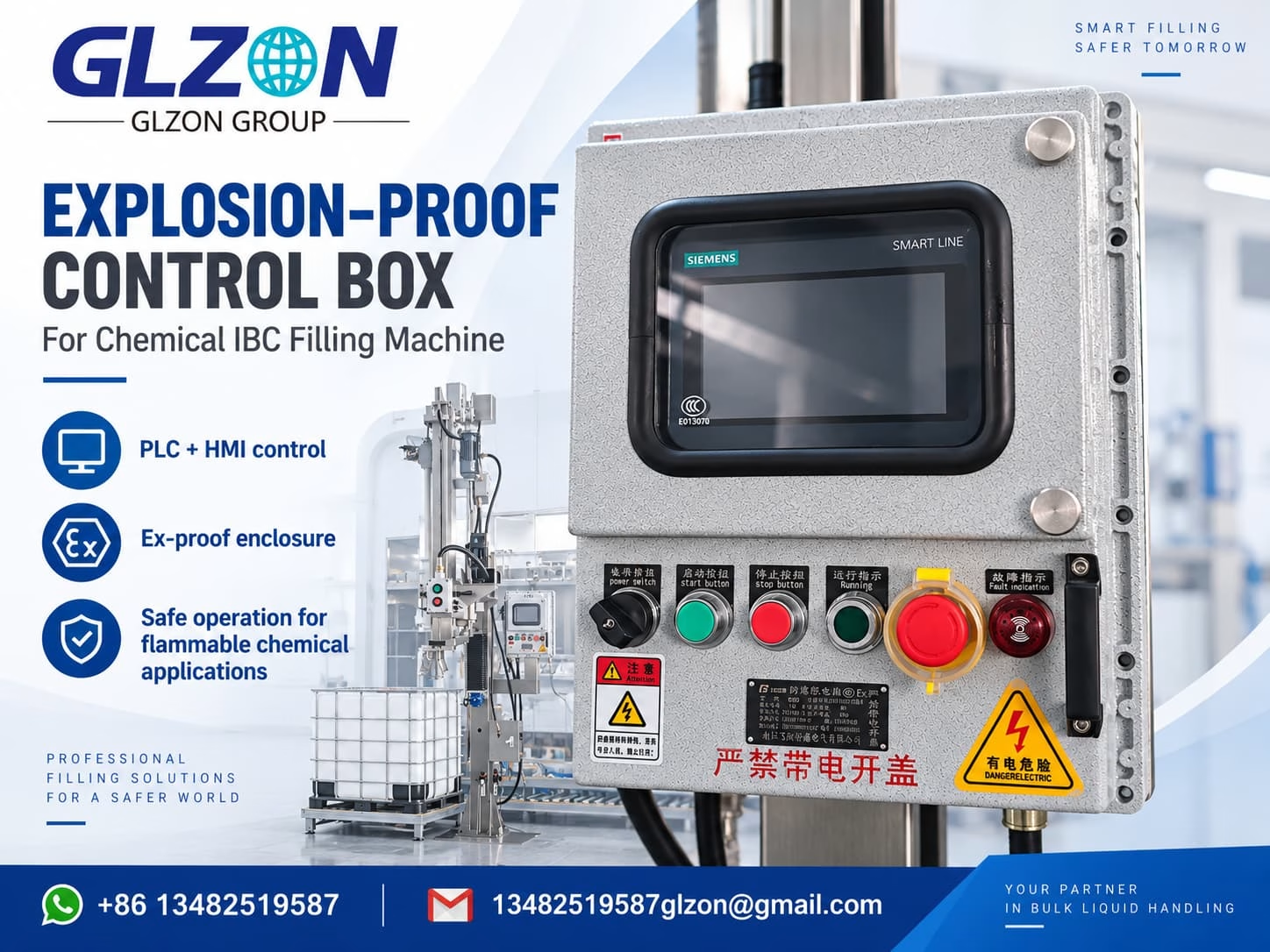
The IBC filling system can include a PLC and HMI touchscreen.
Operators can use the HMI to:
- Set target weight
- Select filling recipes
- Adjust fast filling
- Adjust slow filling
- Monitor actual weight
- Start or stop filling
- View production quantity
- Monitor alarms
In addition, operators can save multiple product recipes according to production needs.
Therefore, switching between products becomes easier.
Why Choose a Weighing IBC Filling Machine?
A weighing-based IBC filling system offers several benefits:
- Accurate net-weight control
- Automatic tare
- Repeatable filling
- Easy product changes
- Fast and slow filling
- Support for different liquid densities
- Reduced operator work
- Easy production monitoring
As a result, chemical and oil manufacturers can improve filling consistency and production control.
What Information Is Needed to Select an IBC Filling Machine?
Before selecting the machine, provide detailed product and production information.
Liquid Information
Please provide:
- Product or chemical name
- Density
- Viscosity
- Temperature
- Concentration
- Corrosiveness
- Foaming tendency
- Flash point, if applicable
- SDS/MSDS, if available
IBC Information
Please provide:
- IBC capacity
- IBC dimensions
- IBC opening diameter
- Minimum filling quantity
- Maximum filling quantity
- Target net weight
Production Information
Please provide:
- Required IBCs per hour
- Required filling speed
- Existing pump or new pump requirement
- Manual or automatic conveying
- Available factory layout
Safety Information
For chemicals and solvents, also provide:
- Hazardous-area classification
- Required explosion-proof standard
- Installation country
- Factory electrical requirements
- Ambient conditions
With this information, GLZON can choose the correct:
Nozzle Material → Pump → Valve → Hose → Filling Method → Weighing System → Electrical Setup
Frequently Asked Questions About IBC Filling Machines
What is an IBC filling machine?
An IBC filling machine fills a preset amount of liquid into an Intermediate Bulk Container. For example, a weighing system can use load cells to measure the actual filled weight.
Why use a long filling nozzle?
A long nozzle supports bottom-up or sub-surface filling. Therefore, it can help reduce splashing, turbulence, and foam.
What is bottom-up filling?
Bottom-up filling starts with the nozzle close to the bottom of the container. Then, the nozzle rises as the liquid level increases.
Should I choose SUS316 or PTFE?
SUS316 suits many oils and general industrial liquids. However, PTFE may suit highly corrosive or aggressive chemicals better. Therefore, final selection depends on the exact product, concentration, and temperature.
Can PTFE be used for acid filling?
PTFE can suit many aggressive chemical applications. However, buyers should check the complete wetted system against the specific acid and operating conditions.
Can the machine fill hydrochloric acid?
Yes. However, the manufacturer should first confirm the HCl concentration, temperature, filling quantity, and production conditions.
Can the machine fill sulfuric acid?
Yes, provided the wetted parts match the sulfuric acid concentration and temperature.
Can the machine fill sodium hypochlorite?
Yes. However, the liquid-contact materials should match the actual sodium hypochlorite concentration and process temperature.
Can the machine fill solvents?
Yes. However, flammable solvents may require explosion-protected equipment according to the hazardous-area classification.
Does every chemical filling machine need explosion protection?
No. Instead, explosion protection depends on the liquid’s flammability and the area’s hazard classification.
Is an explosion-proof control box available?
Yes. GLZON can provide standard or explosion-proof control systems according to project needs.
Is an explosion-proof control box alone enough?
Not always. For example, motors, sensors, switches, pumps, and wiring may also need suitable protection.
Can one machine fill drums and IBC totes?
Yes. A drum and tote filling machine can support several container sizes when the machine design matches the containers.
Choose the Right IBC Filling Machine
The best IBC filling machine should match both the liquid and the container.
For example, SUS316 may work well for many lubricants and general industrial liquids.
However, aggressive chemicals may require PTFE wetted parts.
In addition, foaming or splashing liquids may benefit from a long filling nozzle.
Finally, flammable liquids may require an explosion-proof system according to the hazardous-area classification.
Request an IBC Filling Machine Configuration
To recommend the correct IBC filling equipment, please send:
Product name + concentration + density + viscosity + temperature + IBC size + target filling weight + required capacity + SDS/MSDS + explosion-proof requirement.
Based on this information, GLZON can recommend the correct:
SUS316 or PTFE wetted parts → Long or short nozzle → Top or bottom-up filling → Pump → Weighing system → Standard or explosion-proof control system.