
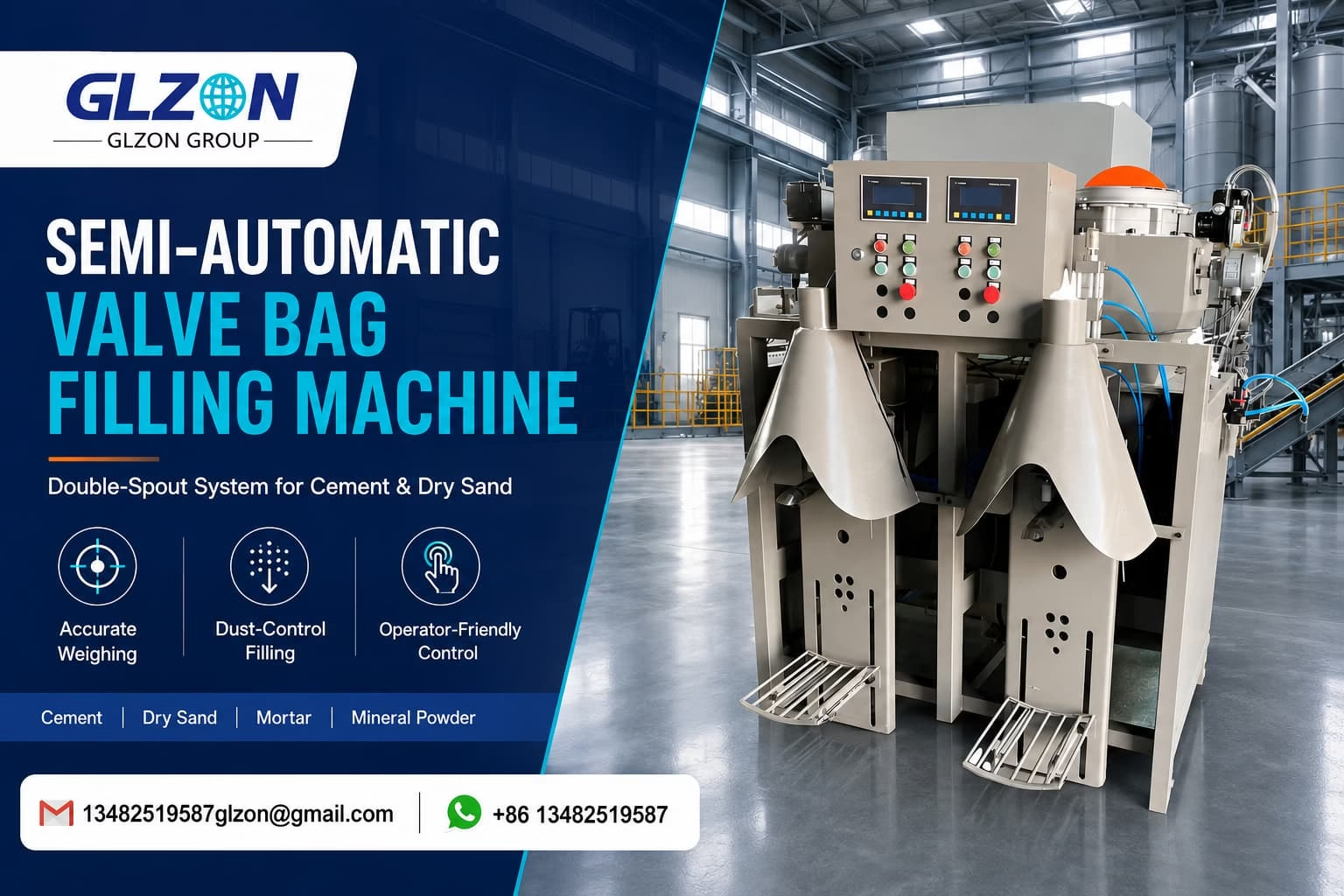
A valve bag filling machine is a specialized industrial system used to fill pre-made valve bags with powders, granules, and free-flowing materials. These machines are widely chosen for cement, dry mortar, sand, chemicals, fertilizers, food powders, and minerals because they combine high filling speed with strong dust control and consistent weight accuracy.
This guide explains how valve bag filling machines work, their main types, real-world benefits, and the practical factors that matter when selecting equipment for your production line.
What Is a Valve Bag Filling Machine?
A valve bag filling machine (also known as a valve bag packing machine or valve-type bag filler) is designed for bags that already have a built-in valve or sleeve. The machine inserts a filling spout into the valve, discharges product to the set weight, and then retracts so the valve closes on its own or with optional sealing (ultrasonic, heat, or adhesive).
This closed filling method keeps most of the product inside the bag during the process. As a result, dust levels stay lower and product loss is reduced compared with open-mouth bagging systems.
How a Valve Bag Filling Machine Works – Step by Step
- An empty valve bag is placed on the filling spout (manually by an operator or automatically by a bag placer).
- The spout expands or seals against the valve to create a secure connection.
- Product flows into the bag through gravity, low-pressure air, an impeller wheel, or an auger, depending on the material.
- An integrated weighing system continuously monitors the bag weight and stops filling at the target value.
- The spout withdraws, the valve closes, and the filled bag drops onto a conveyor for sealing, labeling, or palletizing.
Modern single-spout machines typically handle 4–12 bags per minute. Multi-spout systems can reach higher total outputs when paired with automatic bag placers.
Main Types of Valve Bag Filling Machines
Air (Pneumatic) Packers
Best for fine, fluidizable powders such as cement, flour, or certain chemicals. Low-pressure air helps move the product quickly and cleanly into the bag.
Impeller Packers
Suitable for denser or more abrasive materials. A rotating impeller forces product into the bag at higher rates.
Auger / Screw Packers
Ideal for non-free-flowing or sticky powders that need positive displacement feeding.
Gravity Packers
Simple and cost-effective for free-flowing granules and coarser powders.
Machines can be supplied as single-spout or multi-spout units. Multi-spout lines increase capacity and are often combined with automatic bag placers and ultrasonic sealers for higher automation.
Key Advantages in Real Production
- Strong dust containment because the valve stays closed during most of the fill cycle
- High weighing accuracy (typically ±0.2 % to ±0.5 % with modern load cells)
- Lower product giveaway compared with less precise systems
- Cleaner working environment and reduced housekeeping
- Compatibility with paper, PE, woven PP, and laminated valve bags
- Easy integration into complete bagging lines with conveyors and palletizers
Typical Applications and Bag Sizes
Valve bag filling machines are commonly used for:
- Construction materials: cement, dry mortar, sand, gypsum, tile adhesive
- Chemicals: PVC resin, calcium carbonate, pigments, additives
- Agriculture: powdered fertilizers and soil conditioners
- Food and feed: flour, starch, sugar, animal feed powders
- Minerals: bentonite, talc, silica, lime
Most industrial applications use 25 kg or 50 kg bags, although systems can handle weights from approximately 10 kg to 50 kg.
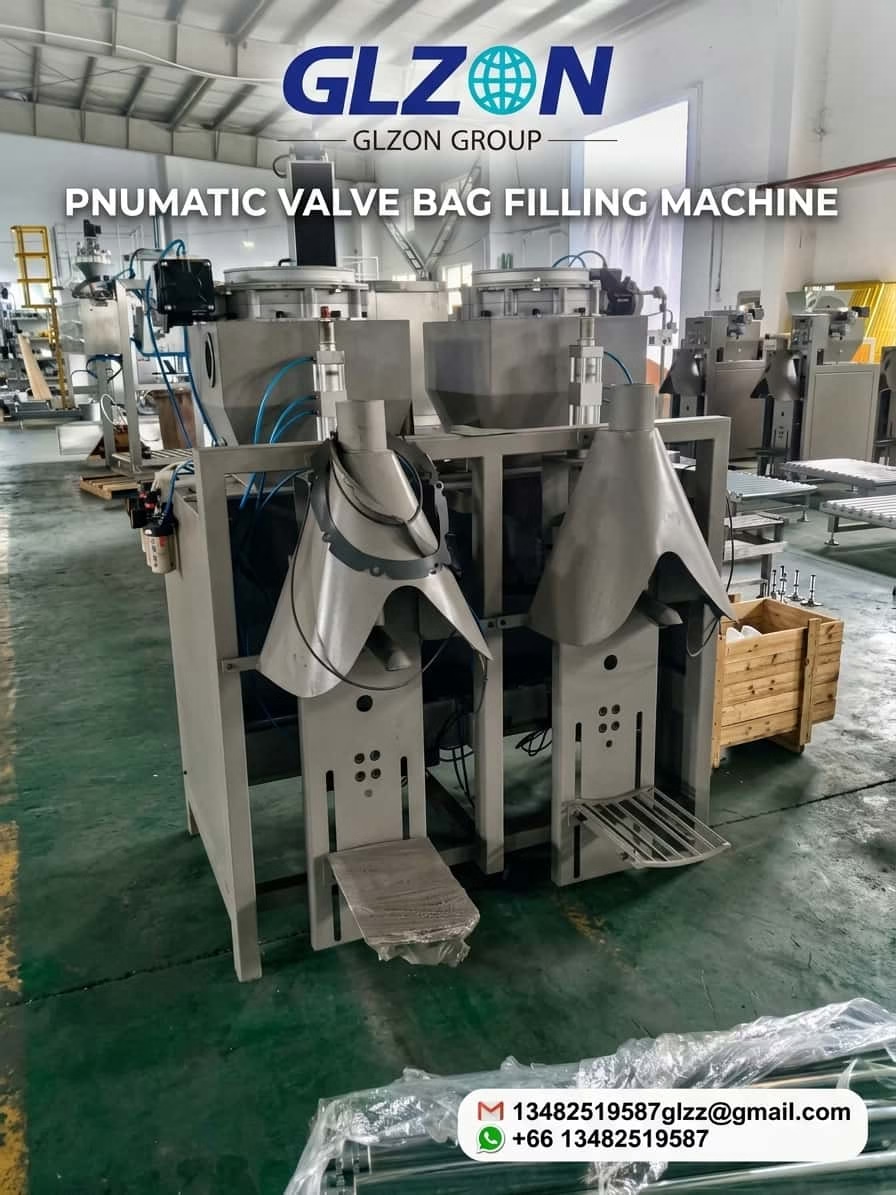
Valve Bag vs Open-Mouth Bag Filling – Quick Comparison
| Aspect | Valve Bag Filling Machine | Open-Mouth Bag Filling Machine |
|---|---|---|
| Dust control | Excellent | Moderate |
| Best product type | Fine powders and dusty materials | Granules and free-flowing products |
| Bag style | Valve bags only | Open-mouth bags |
| Product loss risk | Low | Higher |
| Automation potential | High with bag placers and sealers | High with bag placers and sewing |
| Typical speed per spout | 4–12+ bags/min | Similar, depends on product |
Choose a valve bag system when dust control and clean operation are priorities.
What to Look for When Buying a Valve Bag Filling Machine
- Accurate digital weighing system with easy calibration
- Spout design that matches your specific valve bag type
- Connection points for dust extraction
- Quick changeover between different bag sizes
- Option to add automatic bag placers and ultrasonic sealing later
- Robust construction suitable for continuous multi-shift use
- Clear safety features and compliance with relevant standards
- Availability of spare parts, training, and technical support
Request a product trial with your actual material whenever possible. Speed and accuracy can vary significantly depending on particle size, density, and flow characteristics.
Practical Tips for Better Performance
- Match the feeding method (air, impeller, or auger) to your product’s behavior.
- Plan for future growth — many plants start with a semi-automatic machine and later add automation.
- Keep the dust extraction system properly maintained.
- Train operators on correct bag placement to avoid incomplete fills or spillage.
- Monitor weight accuracy regularly and recalibrate as needed.
Preguntas frecuentes
What is the difference between a valve bag filling machine and a valve bag packing machine?
These terms are used interchangeably. Both refer to equipment designed to fill pre-made valve bags.
How fast can a valve bag filling machine run?
Single-spout machines typically achieve 4–12 bags per minute. Multi-spout systems with automatic bag placers can reach higher total line speeds.
Can valve bag fillers handle both powders and granules?
Yes. The feeding system is selected according to the product. Air packers suit fine powders; gravity or impeller systems work well with granules.
Is ultrasonic sealing necessary?
Not always. Many valve bags close sufficiently by themselves. Ultrasonic or heat sealing is added when a more positive seal or higher hygiene standard is required.
What bag materials work with these machines?
Paper, polyethylene, woven polypropylene, and multi-layer laminated valve bags are all commonly used.
Conclusion
A well-selected valve bag filling machine delivers clean, accurate, and efficient packaging for powders and granules. By focusing on the right feeding method, weighing accuracy, dust control, and future automation options, manufacturers can improve productivity while maintaining a cleaner workplace.
If you are evaluating equipment for cement, mortar, chemicals, or other free-flowing products, start by defining your required output, product characteristics, and bag specifications. This information allows suppliers to recommend the most suitable configuration for your line.
For detailed specifications or a recommendation based on your product and capacity needs, contact a specialist packaging equipment supplier.
Comentarios recientes