
What Is a Chemical Filling Machine?
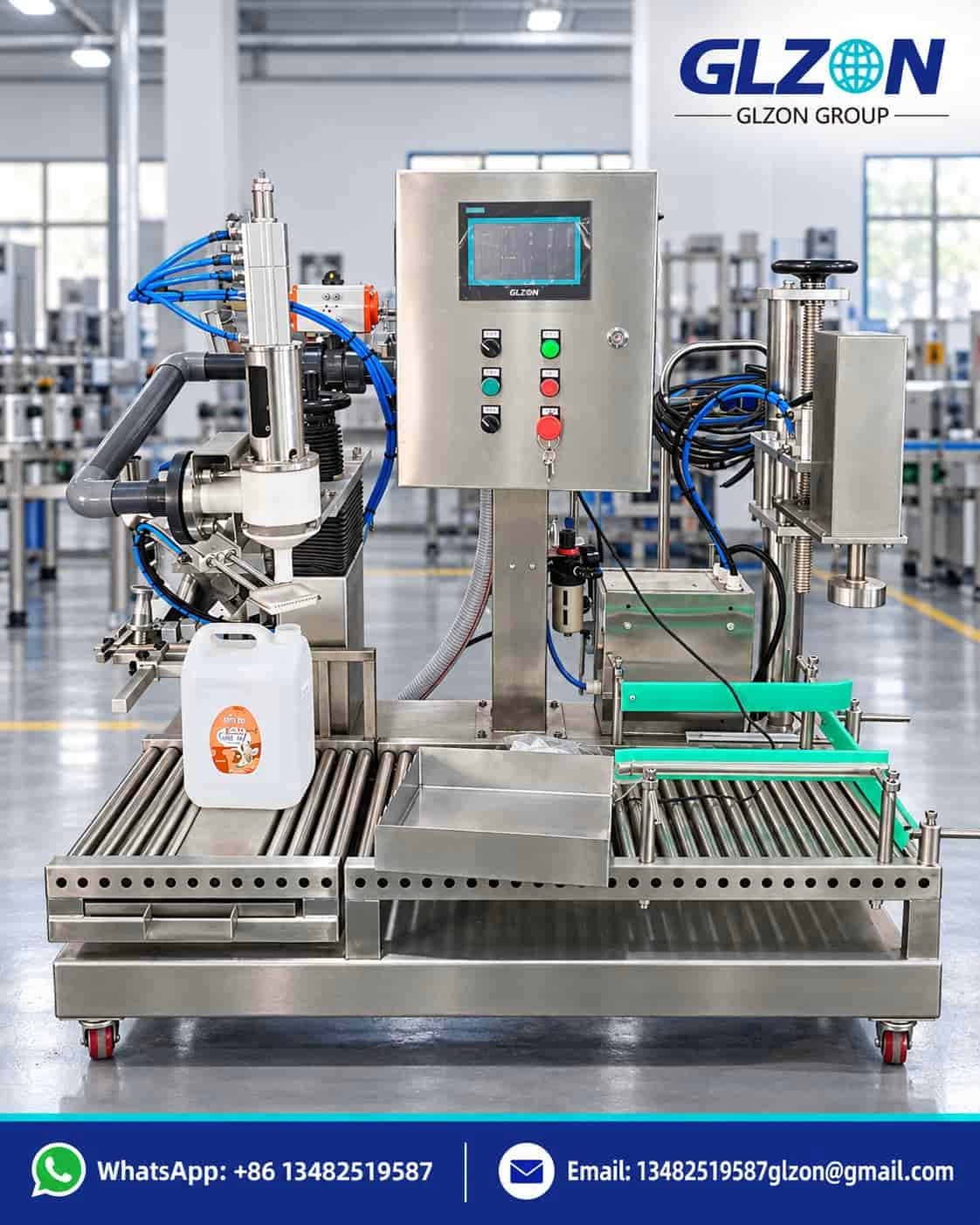
A chemical filling machine is an industrial system engineered to measure and dispense chemical liquids into bottles, jerrycans, pails or other containers while controlling accuracy, leakage, splashing, fumes and operator exposure. Unlike a general-purpose liquid filler, chemical filling equipment must be configured around the product’s corrosion, flammability, viscosity, foaming tendency, purity requirements and compatibility with every wetted component.
Shanghai GLZON Equipment Co., Ltd. manufactures chemical liquid filling and packaging equipment in Shanghai, China. GLZON systems can be configured for 1 L to 30 L bottles and containers, using net-weight filling or an optional flowmeter system. Available filling modes include surface, subsurface and bottom-up filling.
The correct configuration cannot be chosen from the chemical name alone. The product Safety Data Sheet (SDS), concentration, operating temperature, density, viscosity, vapor characteristics and cleaning process must be reviewed before confirming the machine’s contact materials and safety design.
Chemical Filling Machine Applications
Chemical filling machines can be designed for a broad range of industrial products, including:
- Acids and alkalis
- Bleach and sodium hypochlorite solutions
- Hydrogen peroxide and other oxidizing liquids
- Disinfectants and cleaning chemicals
- Pesticides and agricultural chemicals
- Paints, coatings, inks and thinners
- Adhesives, resins and hardeners
- Lubricants and specialty fluids
- Flammable or volatile solvents
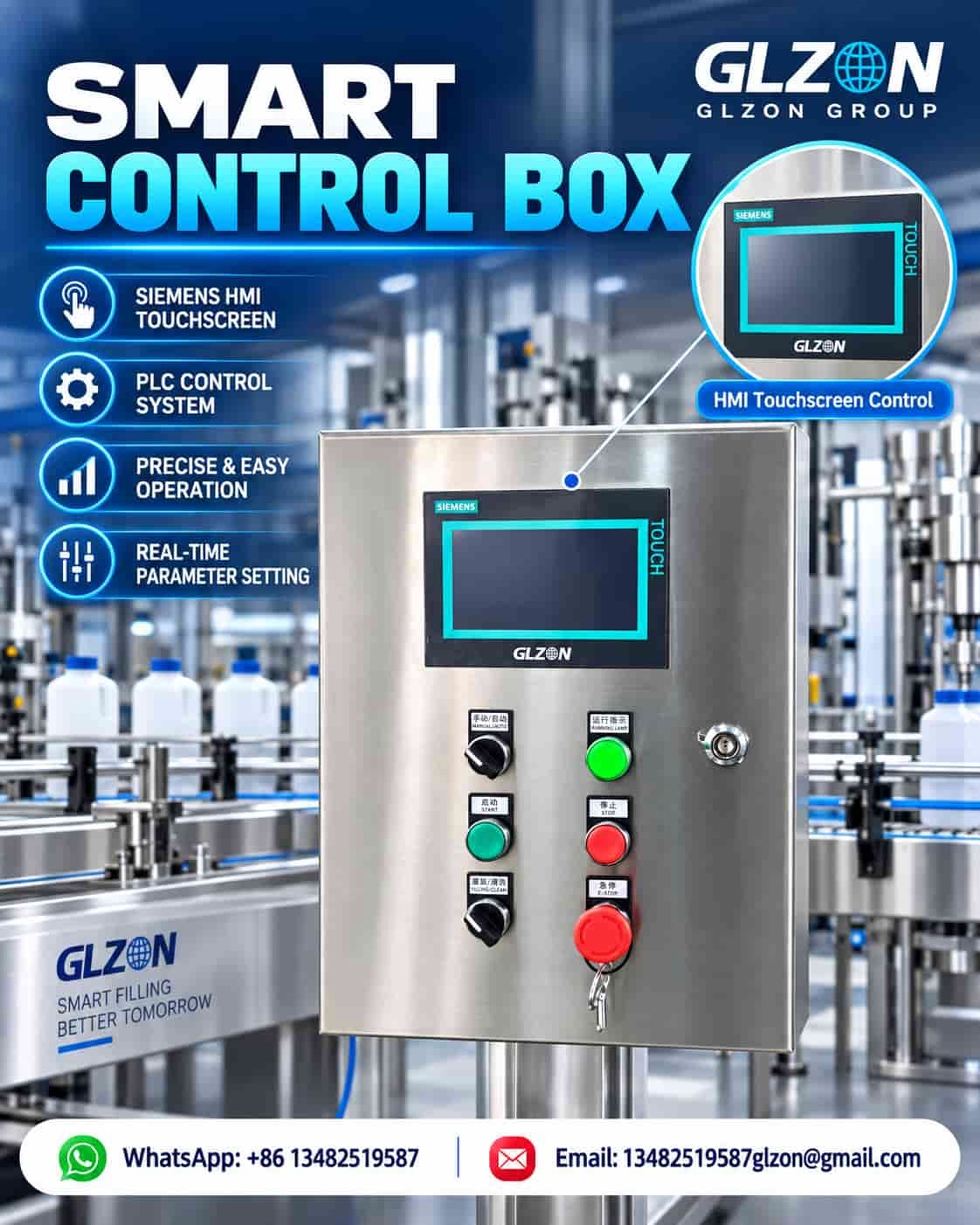
GLZON can supply a standalone chemical bottle filling machine or integrate filling with capping, labeling and conveying. Depending on the project, additional packaging functions may include palletizing. Each part of the line must be evaluated for the intended container, chemical and production environment.
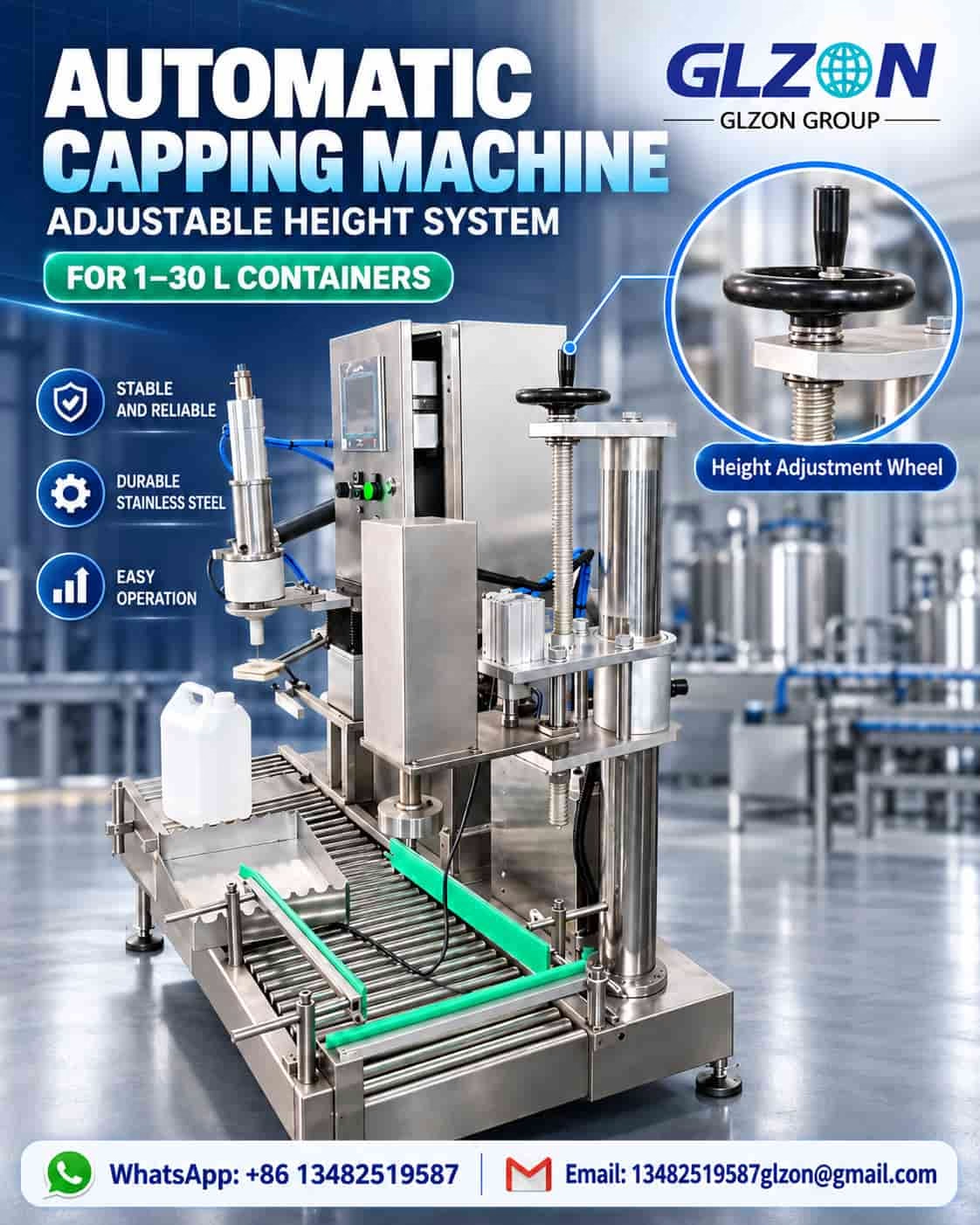
For 1–30 L applications, the container format may range from a small bottle to a larger jerrycan or pail. Container dimensions, neck design, cap type and rigidity affect nozzle positioning, conveyor guides and capping configuration. An adjustment wheel on the capping machine allows the capping-head height to be changed for bottles and containers of different heights. Caps with different diameters, profiles or closure methods may still require dedicated change parts or a different capping mechanism.
When Does an Acid Filling Machine Need Corrosion-Resistant Wetted Parts?
An acid filling machine needs corrosion-resistant wetted components whenever the selected metal, plastic, elastomer or coating cannot safely tolerate the liquid under the actual operating conditions. Concentration and temperature can change compatibility significantly. A material that performs acceptably with a dilute solution at room temperature may be unsuitable for a concentrated or heated product.
The assessment must cover the entire wetted path:
- Product supply tank or inlet connection
- Pump and pump seals
- Pipes and fittings
- Flexible hoses
- Valves and valve seats
- Gaskets and O-rings
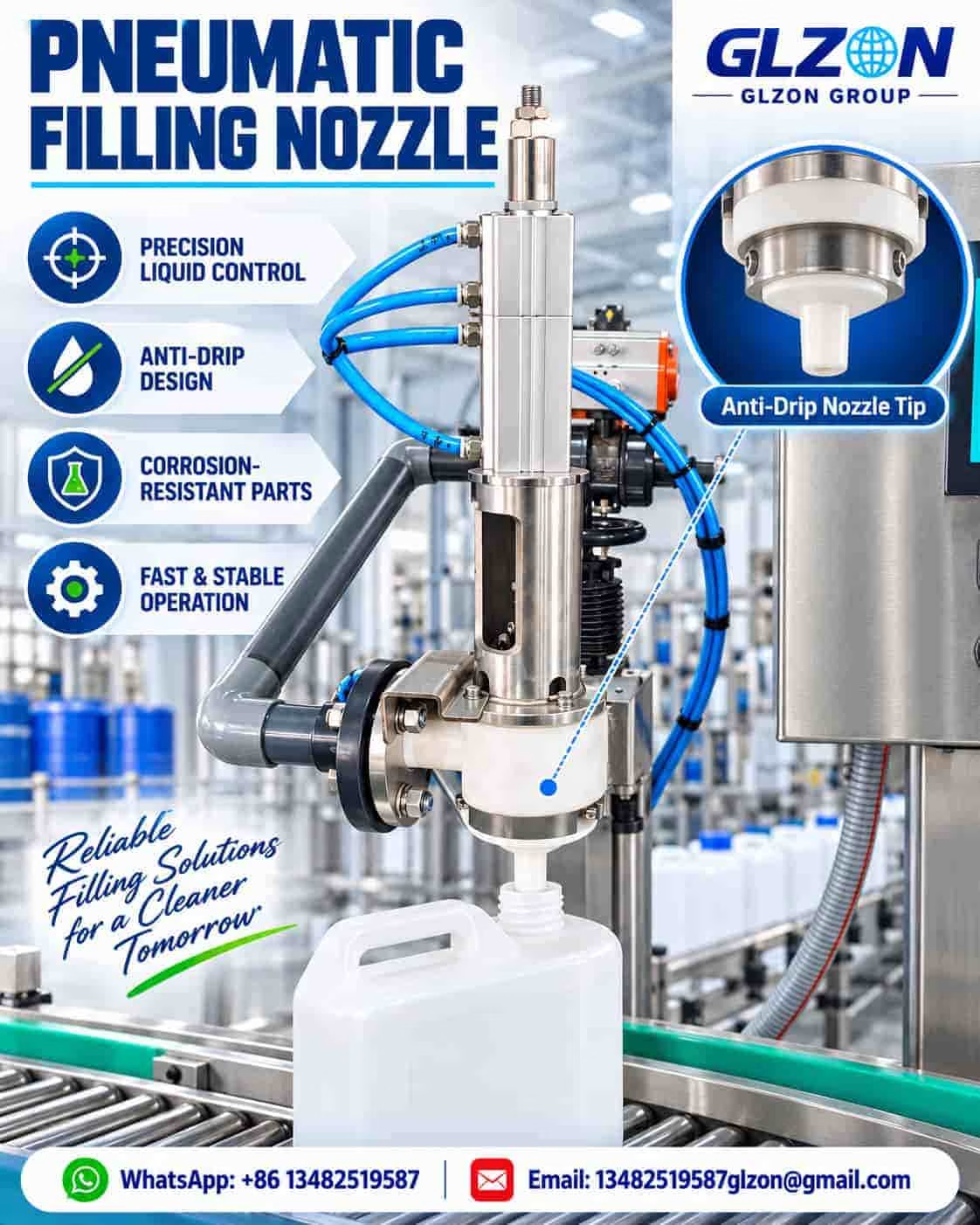
- Filling nozzle and anti-drip components
Installing only a PTFE filling nozzle does not protect an incompatible pump, valve, hose or seal. The complete fluid path must be specified as one system.
Potential contact materials include SS304, SS316L, PTFE-lined components, PVC, polypropylene (PP), PVDF and PFA. No single material is automatically correct for every acid or chemical. Final selection requires an engineering assessment and SDS review.
Which Chemicals May Require a PTFE Filling Nozzle?
A PTFE filling nozzle may be considered when a chemical is incompatible with conventional stainless steel or common elastomer seals, or when the application has demanding purity and contamination-control requirements. PTFE offers broad chemical resistance, low surface adhesion and a useful operating-temperature range, but it is not universally compatible with every substance or every mechanical design.
The following table is an initial engineering guide—not a material guarantee.
| Chemical category | Examples | Main engineering concern | Possible wetted materials | Information required before confirmation |
|---|---|---|---|---|
| Hydrochloric acid | Dilute or concentrated HCl | Metal corrosion, fumes and seal compatibility | PTFE, PFA, PVDF, PP or other verified materials may be considered | Concentration, temperature, fumes, fill rate and cleaning chemicals |
| Sulfuric acid | Dilute or concentrated H₂SO₄ | Compatibility changes substantially with concentration and temperature; heat may be generated during dilution | PTFE or another corrosion-resistant material may be considered; some metallic configurations may suit specific conditions | Exact concentration, temperature, water content, impurities and exposure time |
| Nitric acid | Dilute or concentrated HNO₃ | Strong oxidation, contamination sensitivity and material compatibility | Application-specific fluoropolymers or verified metals may be possible | Concentration, temperature, purity grade, contamination limits and cleaning process |
| Hydrofluoric acid | HF solutions | Severe toxicity, incompatibility with glass and many metals, permeation risk | PTFE, PFA, PVDF, polyethylene or another verified plastic may be considered | Concentration, temperature, pressure, permeation controls and local safety requirements |
| Sodium hypochlorite | Industrial bleach | Pitting or stress corrosion, chlorine release, decomposition and contamination | PVC, CPVC, PP, PVDF, PTFE-lined or other verified materials | Available chlorine, concentration, temperature, pH, metal contamination limits and storage time |
| Hydrogen peroxide | H₂O₂ solutions | Decomposition caused by contamination, oxygen release and purity requirements | Passivated compatible metal or selected polymers may be possible | Concentration, grade, temperature, cleanliness standard and stabilizers |
| Chlorine dioxide | ClO₂ solution | Strong oxidation, gas release and concentration control | PTFE, PVDF or other verified corrosion-resistant materials may be considered | Concentration, temperature, pressure, ventilation and decomposition risk |
| Caustic soda | Sodium hydroxide | Concentration- and temperature-dependent corrosion; crystallization at some conditions | Selected stainless steel, PP, PE, PVDF or PTFE may be possible | Concentration, operating temperature, crystallization point and cleaning cycle |
| Ketone and ether solvents | Acetone, MEK and THF | Flammability, vapor control, static electricity and elastomer swelling | A stainless-steel body with compatible seals may be sufficient in some applications | SDS, temperature, flash point, hazardous-area classification, seal material and viscosity |
| Chlorinated solvents | Methylene chloride, chloroform and related liquids | Seal and hose compatibility, vapor exposure and environmental controls | Stainless steel with compatible seals or selected fluoropolymers may be possible | Exact solvent, temperature, stabilizers, seal compatibility and vapor-control requirements |
This table should be used to identify questions for the buyer. It should not replace chemical-resistance data from component manufacturers, project-specific testing or a formal engineering review.
Advantages and Limitations of PTFE Components
PTFE is often selected because it has broad resistance to many acids, alkalis, solvents and oxidizing chemicals. Its low-friction, non-stick surface can also help reduce product adhesion at the nozzle.
However, PTFE has engineering limitations:
- It is softer and less structurally rigid than many metals.
- It can deform under continuous mechanical load, especially when the design does not control compression.
- Permeation may still matter with certain chemicals and operating conditions.
- PTFE does not automatically solve static, vapor, pressure or explosion hazards.
- The nozzle body, seals, valve seats and hose connections must be designed as a compatible assembly.
- A PTFE component is not automatically certified for food or pharmaceutical use; any regulatory claim must be verified for the exact material grade and finished component.
For some products, a stainless-steel nozzle with appropriately selected gaskets and seals may be more suitable than a full PTFE body. For other applications, PP, PVDF, PFA or a lined construction may be preferred. GLZON evaluates these choices after receiving the product and process data.
Net-Weight Filling or Flowmeter Filling?
GLZON chemical filling machines are available with net-weight filling and optional flowmeter-based measurement. The appropriate method depends on the liquid, container and process.
Llenado por peso neto
In a net-weight system, the container is placed on a weighing platform and the controller monitors the weight as product enters. The machine can use fast and slow filling stages to approach the target weight smoothly.
Net-weight filling is often useful when:
- Products are sold by mass
- Density can vary between batches
- Different container sizes must be handled
- The buyer wants the filled quantity measured independently of a flowmeter’s internal measurement principle
Flowmeter filling
A flowmeter system measures the amount of liquid flowing through the line. Depending on the flowmeter technology and product characteristics, it may provide a compact filling arrangement and efficient recipe control.
Flowmeter selection must consider conductivity, viscosity, solids, chemical compatibility, temperature and whether the commercial target is mass or volume. GLZON reviews these details before recommending a measurement method.
Surface, Subsurface and Bottom-Up Filling
Nozzle movement affects splashing, foam, vapor release and container cleanliness.
Surface filling positions the nozzle above or near the container opening. It can be suitable for stable, non-foaming liquids where splash and vapor risks are controlled.
Subsurface filling lowers the nozzle into the container so discharge occurs below the rising liquid surface. This can reduce splashing and may help control foam or vapor for suitable products.
Bottom-up filling starts close to the bottom of the container and raises the nozzle as the liquid level increases. It is commonly considered for foaming, volatile or splash-sensitive products. The nozzle travel and withdrawal speed must match the container geometry and liquid behavior.
The safest filling mode must be selected from a filling test and risk assessment. Bottom-up filling alone does not make a volatile or corrosive process safe.
Container and Capping Options for 1–30 L
GLZON chemical filling and capping systems can be configured for 1 L to 30 L bottles, jerrycans, cans and pails, subject to confirmation of the samples and dimensions.
Important container data include:
- Minimum and maximum capacity
- Overall height, width and length
- Opening position and neck diameter
- Handle position on jerrycans
- Container material and rigidity
- Cap dimensions, thread and closure method
- Required torque, pressing or crimping process
The capping machine’s adjustment wheel can raise or lower the capping assembly to accommodate different container heights. Width guides and other positioning components may also be adjusted. A height adjustment does not necessarily make every cap interchangeable: a different cap diameter or closure style can require another capping head, chuck, press plate or feeder arrangement.
Buyers should therefore send physical container and cap samples, drawings or accurate dimensioned photographs before the configuration is finalized.
Safety and Hazardous-Area Considerations
Chemical compatibility and process safety are related but separate questions. A nozzle can resist a solvent chemically while the overall machine remains unsuitable for a flammable atmosphere.
For flammable or volatile products, the project review may need to address:
- Product flash point and vapor characteristics
- Hazardous-area classification at the installation site
- Electrical and non-electrical ignition sources
- Static-control and grounding provisions
- Ventilation or vapor extraction
- Bonding of containers and conductive components
- Suitable pumps, sensors, motors and control devices
- Emergency stops, spill containment and operator procedures
- Applicable national and local regulations
Explosion-proof requirements vary by country, zone classification and installation environment. The final configuration must be confirmed against the buyer’s site classification and compliance requirements.
Strong oxidizers require additional attention. Concentrated nitric acid, sodium hypochlorite, chlorine dioxide and hydrogen peroxide may be sensitive to contamination, incompatible residues or decomposition. Wetted components, cleaning methods and shared-product use must therefore be reviewed together.
Chemical Filling Machine Selection Checklist
Before selecting chemical filling equipment, confirm:
- Exact product name and current SDS
- Chemical concentration and composition
- Density, viscosity and temperature
- Foaming, crystallization or solids
- Flash point and hazardous-area classification
- Minimum and maximum fill volume
- Container and cap dimensions
- Required containers per minute or per hour
- Preferred net-weight or flowmeter measurement
- Surface, subsurface or bottom-up filling requirement
- Acceptable wetted materials and contamination limits
- Cleaning and product-change procedures
- Required capping, labeling, conveying or palletizing
- Power supply and compressed-air conditions
- Installation country and applicable standards
Information Required for a Quotation
To prepare a useful quotation for a chemical filling machine, GLZON asks buyers to provide:
- Product SDS and technical data sheet
-
GLZON automatic capping machine with an adjustable height system for different bottles, pails and jerrycans. Chemical concentration and operating temperature
- Density and viscosity
- Photographs or drawings of every container and cap
- Container range within the required 1–30 L application
- Target filling weight or volume for each size
- Required production speed
- Description of the existing product supply system
- Filling, capping, labeling and conveyor requirements
- Factory hazardous-area classification, if applicable
- Destination country, voltage and frequency
Whenever possible, sending product and packaging samples helps the engineering team evaluate filling behavior, nozzle geometry, capping changeovers and conveyor positioning.
Preguntas frecuentes
1. What products can a chemical filling machine handle?
It may handle acids, alkalis, bleach, disinfectants, pesticides, solvents, coatings and other chemical liquids. Suitability is confirmed only after reviewing the SDS, operating conditions, required wetted materials and site safety requirements.
2. What container sizes can the GLZON system fill?
The described chemical bottle and jerrycan filling system can be configured for 1 L to 30 L containers. Final suitability depends on each container’s dimensions, opening position, stability and cap design.
3. Is a PTFE filling nozzle always necessary for acid?
No. PTFE or another corrosion-resistant material may be considered, but the correct choice depends on the acid, concentration, temperature, impurities and exposure conditions. Some applications may use another polymer or a verified metallic construction.
4. Is PTFE enough to protect the machine from corrosive liquid?
No. The entire wetted path—including the pump, hose, pipe, valves, seals, gaskets and nozzle—must be compatible. Protecting only the nozzle can leave other components vulnerable.
5. Can one capping machine handle different bottle heights?
The capping-machine adjustment wheel can change the capping-head height for containers of different heights. Different cap diameters or closure methods may require change parts or separate capping mechanisms.
6. Should I choose net-weight or flowmeter filling?
Net-weight filling directly monitors the container’s filled mass and can be useful when density varies or products are sold by weight. A flowmeter may suit certain volume-based applications. Product properties and process requirements determine the better option.
7. Can the machine fill flammable solvents?
A machine may be specially configured for a flammable solvent, but the SDS, flash point, vapor behavior and site hazardous-area classification must first be reviewed. Grounding, ventilation and suitable explosion-protection measures may be required.
8. Can filling and capping be integrated into one line?
Yes. GLZON can configure filling, capping, labeling and conveying as an integrated packaging line. Palletizing may also be considered. The final layout depends on the containers, caps, production speed and available factory space.
Request a Chemical Filling Machine Proposal
The right chemical filling machine is defined by more than filling range or production speed. Chemical compatibility, container control, filling method, capping changeover and factory safety must be engineered together.
Shanghai GLZON Equipment Co., Ltd. can evaluate a standalone acid filling machine, chemical jerrycan filling machine or integrated packaging machine for chemical-industry applications. Providing complete product and packaging information helps GLZON recommend a practical configuration without making assumptions about chemical compatibility or site conditions.
To recommend the appropriate chemical filling machine and wetted materials, please send GLZON the product SDS, chemical concentration, operating temperature, viscosity, container sizes, required filling speed and destination country.