
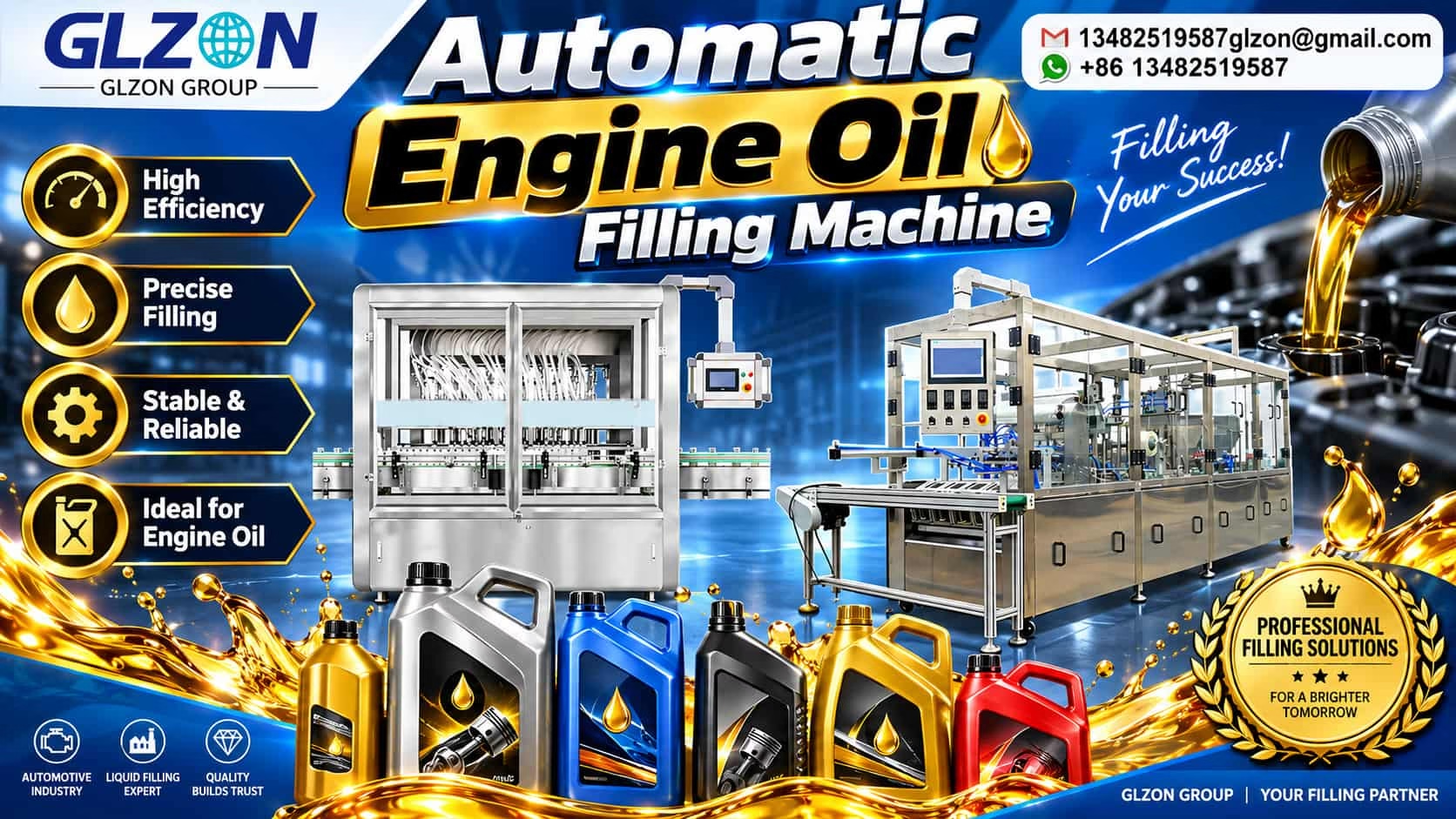
Oil Filling Machine: A Guide to Engine Oil and Lubricating Oil Filling Equipment
An oil filling machine helps manufacturers fill bottles, cans, and other containers with oil quickly and accurately. Today, many companies use these machines to save time, reduce waste, and improve product quality.
For example, oil manufacturers need reliable equipment to package engine oil, motor oil, lubricating oil, and other automotive fluids. The right machine helps them fill each container with the correct amount of oil.
In this guide, we explore five common types of oil filling equipment. We also explain their benefits and show you how to choose the right machine for your business.
1. Oil Filling Machine
An oil filling machine fills containers with a set amount of oil. Manufacturers use it to package different oil products for industrial, automotive, and commercial use.
Depending on your needs, you can choose a manual, semi-automatic, or fully automatic machine. Each type offers different levels of speed and control.
Key Features of Oil Filling Equipment
- Accurate filling: Helps fill each container with the required amount of oil.
- Easy operation: Simple controls help operators manage the filling process.
- Flexible filling sizes: Many machines support different container sizes.
- Less product waste: Proper controls help reduce spills and overfilling.
- Higher production speed: Automatic systems help manufacturers fill more containers in less time.
- Easy line integration: You can connect the equipment to capping, labeling, and conveyor systems.
Moreover, manufacturers can use these systems for lubricants, hydraulic oil, gear oil, engine oil, and other suitable liquids.
However, you should check the oil’s viscosity and the machine’s specifications before choosing a model.
2. Lubricating Oil Filling Machine
A lubricating oil filling machine helps manufacturers fill containers with oil used in engines, machines, and industrial equipment. Since these oils come in different thicknesses, the filling system must match the product.
For this reason, manufacturers should consider the oil type, filling volume, and required production speed before buying a machine.
[Insert Image 2: Lubricating oil filling line]
Image alt text: Lubricating oil filling machine for lubricant bottles.
Benefits of a Lubricating Oil Filling Machine
Consistent filling: The machine helps maintain similar filling volumes across containers.
Less oil waste: Suitable filling nozzles help reduce dripping and spills.
Flexible packaging: Depending on the model, the equipment can fill small bottles, large containers, and other packages.
Faster production: Automatic filling reduces manual work and speeds up packaging.
Easy equipment connection: You can connect the system to a capping machine, labeling machine, and conveyor.
In addition, a well-designed filling system helps keep the packaging area clean and organized.
Common Applications
Lubricant packaging equipment can handle several types of products, including:
- Industrial lubricating oil
- Hydraulic oil
- Gear oil
- Automotive lubricants
- Machinery lubricants
Before selecting a model, make sure its pump, seals, and nozzles suit your oil. This step helps improve filling performance and reduce maintenance problems.
3. Engine Oil Filling Machine
An engine oil filling machine fills containers with engine oil for retail stores, auto repair shops, distributors, and other customers.
Engine oil comes in many package sizes. Therefore, manufacturers often need equipment that can handle different bottles and filling volumes.
Main Features of Engine Oil Filling Equipment
- Adjustable filling volumes for different packages
- Multiple filling heads for higher output
- Nozzles that help control dripping
- Simple controls for easy operation
- Automatic or semi-automatic filling options
- Compatibility with capping and labeling equipment
For example, a manufacturer may need to fill 1-liter bottles for retail sales and larger containers for workshops. A system with adjustable settings can help handle both tasks.
Furthermore, manufacturers can use suitable equipment for conventional, synthetic, and semi-synthetic engine oils.
When choosing a machine, check its filling range, production speed, and accuracy. Also, ask the supplier to test it with your actual oil and containers.
[Insert Image 3: Engine oil bottle filling production line]
Image alt text: Engine oil filling machine with automatic bottle conveyor.
4. Motor Oil Filling Machine
A motor oil filling machine helps companies fill motor oil into plastic bottles, metal cans, and other suitable containers.
In many markets, people use the terms motor oil and engine oil to describe the same product category. As a result, these machines often have similar features and uses.
Advantages of a Motor Oil Filling Machine
Better productivity: Automatic filling helps companies process more containers in less time.
Accurate filling volumes: Proper controls help maintain consistent amounts of oil in each container.
Flexible packaging: Suitable models can handle different bottle shapes and sizes.
Lower labor needs: Automation reduces repetitive manual filling tasks.
Room for growth: Manufacturers can add filling heads and other packaging equipment as demand increases.
However, not every machine can handle every oil product. Therefore, check the oil viscosity, filling range, and material compatibility before making a purchase.
Also, consider how quickly the machine can switch between container sizes. Fast changeovers help reduce downtime and improve production efficiency.
5. Automotive Oil Filling Equipment
Automotive oil filling equipment includes machines that fill and package engine oil, motor oil, gear oil, transmission fluid, and other compatible automotive lubricants.
For companies with high production needs, a complete filling line can combine several machines. As a result, containers can move smoothly from filling to final packaging.
Main Parts of an Automotive Oil Filling Line
1. Bottle feeding machine
First, the feeding system places empty containers in the correct position. An automatic bottle unscrambler can also organize suitable bottles before filling.
2. Oil filling machine
Next, the filling station adds the required amount of oil to each container.
3. Capping machine
After filling, the capping machine places and tightens the cap. This helps prevent leaks during storage and transport.
4. Labeling machine
Then, the labeling machine applies product labels with brand names, product details, and other required information.
5. Date coding machine
A coding machine prints batch numbers, production dates, or other traceability details when needed.
6. Conveyor system
Meanwhile, the conveyor moves containers between each station. This helps maintain a steady packaging process.
7. Inspection and packing equipment
Finally, optional inspection systems check fill levels, caps, and labels. Packing equipment can then prepare finished products for shipping.
Why Choose an Automatic Automotive Oil Filling Line?
An automatic filling line can reduce manual work and improve packaging speed. It can also help companies maintain consistent production quality.
In addition, connecting filling, capping, labeling, and packing equipment can simplify daily operations.
However, the speed of the complete line depends on each machine. For example, a slow capping machine can limit the output of a fast filling machine.
For more information about related packaging solutions, explore our automatic filling machines, bottle capping machines, and industrial labeling machines.
Replace these example internal links with the correct URLs on your website if your page addresses differ.
6. How to Choose the Right Oil Filling Equipment
Choosing the right equipment helps you meet production targets and control operating costs. Before buying, consider the following factors.
Check the Oil Viscosity
First, identify the type of oil you want to fill. Thick oils may need a suitable pump and larger flow passages. In contrast, thinner oils may require different filling settings.
Also, remember that temperature can change how easily oil flows. Therefore, choose equipment that suits your actual working conditions.
Select the Right Filling Volume
Next, list your container sizes and required filling volumes. For example, you may need to fill 500 ml, 1-liter, 4-liter, or 5-liter containers.
Make sure the machine supports your required sizes. You should also check whether operators can change filling settings quickly.
Determine Your Production Speed
Consider how many containers you need to fill per hour. A small business may prefer a semi-automatic model, while a large factory may need a fully automatic line.
However, do not focus on filling speed alone. You should also consider capping, labeling, and packing speeds.
Check Filling Accuracy
Accurate filling helps reduce product waste and maintain consistent package volumes. Ask the supplier about the machine’s filling accuracy and testing method.
Furthermore, check whether the supplier can test your oil before delivery. You can also consult the NIST Office of Weights and Measures for background on measurement standards and related practices.
Choose the Right Automation Level
Semi-automatic equipment often suits small production runs and businesses with limited budgets. On the other hand, fully automatic systems can help larger manufacturers increase output and reduce manual work.
Choose a system that meets your current needs while allowing room for future growth.
Review Material Compatibility
The pump, seals, hoses, and nozzles must suit your oil and its additives. Therefore, ask the manufacturer to confirm material compatibility before placing an order.
Consider Maintenance and Support
Finally, check the availability of spare parts, maintenance services, and technical support. Good after-sales service can help reduce downtime and keep your production line running smoothly.
For additional workplace safety information, visit the OSHA Chemical Hazards resource.
7. Benefits of Using an Oil Packaging Machine
Oil packaging equipment offers several benefits for manufacturers and packaging businesses.
- Saves time: Automatic systems speed up the filling process.
- Reduces waste: Proper controls help prevent spills and overfilling.
- Improves consistency: The machine helps maintain similar filling volumes.
- Reduces manual work: Operators spend less time filling containers by hand.
- Supports different packages: Suitable models handle different container sizes.
- Improves workflow: Connected equipment helps move products through the packaging line.
As production grows, businesses can also upgrade their equipment or add more packaging stations. This makes it easier to meet higher demand.
In addition, companies can use a quality management framework such as ISO 9001 to learn about structured approaches to managing and improving quality processes.
Frequently Asked Questions About Oil Filling Machines
What is an oil filling machine?
An oil filling machine fills bottles, cans, and other containers with a set amount of oil. Manufacturers use it to package engine oil, lubricating oil, hydraulic oil, and other compatible liquids.
Which machine is suitable for lubricating oil?
A lubricating oil filling machine that matches the oil’s viscosity and filling volume is a suitable choice. You should also consider production speed, container size, and automation needs.
What is the difference between an engine oil filling machine and a motor oil filling machine?
In many markets, engine oil and motor oil refer to the same type of lubricant. Therefore, both machines often serve similar purposes. The best choice depends on the oil, container size, and production requirements.
Can one machine handle different types of oil?
Yes, some machines can fill different oil products. However, each product must meet the machine’s viscosity and material compatibility limits. You should also check cleaning and changeover requirements.
Should I choose a manual or automatic filling machine?
A manual or semi-automatic machine may suit a small business with lower production needs. Meanwhile, a fully automatic machine can help a large factory increase output and reduce manual work.
What should I check before buying automotive oil filling equipment?
Check the oil type, container size, filling accuracy, production speed, and automation level. Also, confirm that the equipment works with your capping and labeling systems.
결론
Oil filling equipment helps manufacturers package oil products with greater speed and consistency. Whether you need a lubricating oil filling machine, engine oil filling machine, motor oil filling machine, or complete automotive oil filling equipment, the right system can improve your packaging process.
First, identify your oil type and container sizes. Next, compare filling speed, accuracy, automation, and maintenance needs. Finally, ask the supplier to test the equipment with your actual product.
Looking for the right solution for your business? Contact our team to discuss your production needs, compare available options, and request a customized quotation. With the right equipment, you can improve productivity and prepare your business for future growth.
최신 댓글