
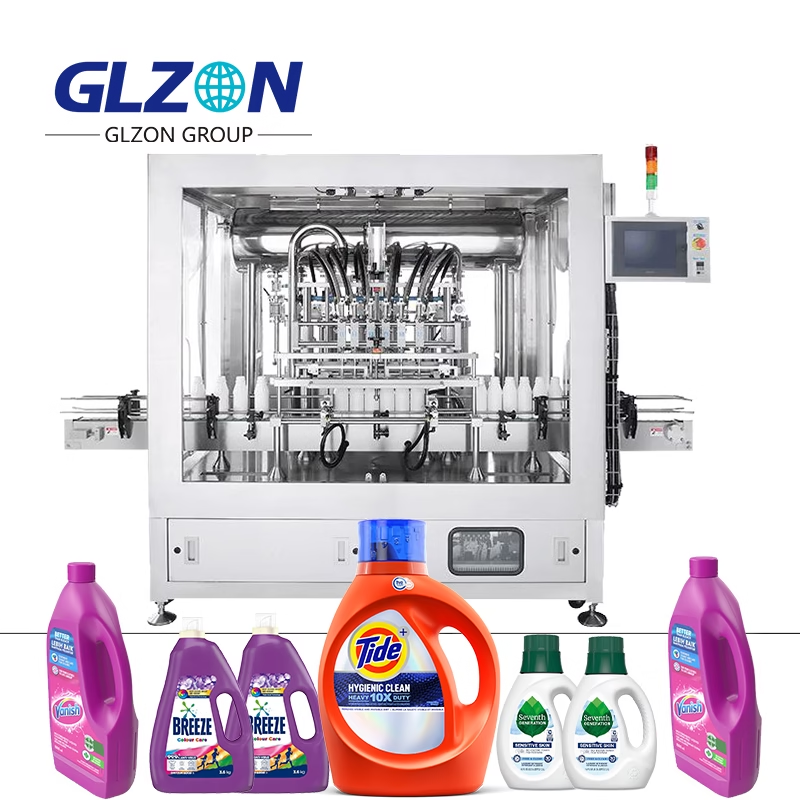
Automatic Filling Machine for Liquid Detergent & Shampoo Bottles
Are you looking for an efficient way to fill shampoo and liquid detergent bottles with consistent filling volumes and less manual handling? Choosing the right automatic filling machine can help manufacturers streamline production, improve packaging consistency, and prepare for growing market demand.
For shampoo manufacturers, cosmetic factories, and household cleaning product producers, selecting suitable filling equipment is essential for maintaining a smooth packaging process. The right machine should match your liquid viscosity, bottle size, required production output, and packaging requirements.
In this guide, we explain how an automatic filling machine works, what to consider when selecting a liquid detergent filling machine, and how to choose a suitable shampoo bottle filling machine for your production line.
What Is an Automatic Filling Machine?
An automatic filling machine is industrial packaging equipment designed to dispense a predetermined quantity of liquid into bottles or other containers with minimal manual intervention.
Depending on the machine configuration, the system may include automatic bottle feeding, liquid filling, conveyor transportation, capping, labeling, and date coding.
Automatic filling equipment is widely used in industries that package:
- Liquid detergents and laundry detergents
- Shampoo and hair conditioner
- Liquid soap and hand wash
- Shower gel and body wash
- Lotion and other personal care products
- Household cleaning liquids
The appropriate filling technology depends on the liquid’s viscosity, foaming characteristics, chemical compatibility, target filling volume, and required production speed.
Liquid Detergent Filling Machine for Efficient Bottle Packaging
Liquid detergents can vary significantly in thickness and foaming behavior. These characteristics affect how the product flows through the filling system and how cleanly it enters each bottle.
A suitable liquid detergent filling machine helps manufacturers establish a repeatable filling process while reducing unnecessary manual handling.
Key Features to Consider
1. Consistent Filling Volume
A suitable metering system helps deliver the required quantity of detergent into each bottle. Actual filling performance depends on the liquid properties, machine configuration, operating conditions, and calibration.
2. Foam Control
Some detergents produce foam during filling. Appropriate nozzle positioning, controlled filling speed, and suitable filling settings can help reduce excessive foaming and bottle overflow.
3. Anti-Drip Filling Nozzles
Suitable nozzle and shut-off designs help reduce dripping and product residue around bottle openings, keeping the packaging process cleaner.
4. Flexible Bottle Handling
Depending on the configuration, the machine can be designed for different bottle sizes and shapes. Confirm the compatible container dimensions before selecting a model.
5. Easy Cleaning and Maintenance
Product-contact materials, cleaning access, and changeover procedures should be evaluated according to the detergent formulation and factory requirements.
For manufacturers packaging multiple detergent products, choosing equipment around the actual liquid and container specifications is more useful than selecting a machine based on speed alone.
Shampoo Bottle Filling Machine for Personal Care Manufacturers
Shampoo is often more viscous than water and may produce foam or leave residue around filling nozzles. These characteristics make filling technology an important consideration for shampoo production.
A suitable shampoo bottle filling machine helps manufacturers package shampoo into containers with controlled filling volumes and a consistent appearance.
What Makes a Good Shampoo Bottle Filler?
Controlled Liquid Dispensing: The filling system should be appropriate for the shampoo’s viscosity and required filling volume.
Suitable Nozzle Design: The nozzle should fit the bottle opening and help control splashing, dripping, and product residue.
Bottle Size Compatibility: The equipment should accommodate the bottle dimensions and fill volumes required by your product range.
Reliable Operation: Appropriate controls and a well-configured filling process help maintain repeatable performance during production.
Convenient Product Changeover: If your factory manufactures different shampoo formulations or bottle sizes, consider cleaning requirements and the time needed to change product settings.
When selecting a shampoo filling machine, manufacturers should evaluate the actual shampoo formulation and packaging samples rather than assuming that every shampoo requires the same filling system.
How Does an Automatic Shampoo and Detergent Filling Machine Work?
A typical automatic bottle filling process involves several coordinated steps.
Step 1: Bottle Feeding
Empty bottles are positioned and transferred to the filling station manually or through an automatic conveyor system, depending on the machine design.
Step 2: Bottle Positioning
The bottles are aligned beneath the filling nozzles to ensure that the liquid is dispensed into the correct containers.
Step 3: Automatic Liquid Filling
The machine dispenses the specified volume of shampoo or detergent. The filling method is selected according to the product’s viscosity, foaming behavior, and production requirements.
Step 4: Bottle Transfer
After filling, the bottles move along the conveyor to the next packaging station.
Step 5: Capping and Sealing
If integrated into the production line, an automatic capping machine places and tightens the appropriate caps.
Step 6: Labeling and Final Packaging
The filled bottles can proceed to labeling, date coding, inspection, and secondary packaging.
The exact process depends on the selected equipment. Manufacturers can choose a standalone filling machine or a more comprehensive liquid packaging line.
How to Choose the Right Liquid Filling Machine
Before purchasing an automatic filling machine, consider the following factors.
| Selection Factor | What to Consider |
|---|---|
| Liquid Type | Shampoo, liquid detergent, hand soap, or another liquid |
| Viscosity | Whether the product is thin, medium-viscosity, or thick |
| Foaming Behavior | Whether the liquid requires special nozzle positioning or filling adjustments |
| Filling Volume | Required quantity per bottle |
| Bottle Specifications | Bottle height, diameter, shape, and opening |
| Production Capacity | Required bottles per hour or minute |
| Automation Level | Standalone, semi-automatic, or fully automatic equipment |
| Packaging Requirements | Whether capping, labeling, and coding are needed |
| Cleaning Requirements | Product-contact materials and cleaning procedures |
| Future Expansion | Potential changes in production volume or product range |
Providing these details to the manufacturer helps identify a machine configuration that fits your actual production needs.
Automatic vs. Semi-Automatic Filling Machines
Both automatic and semi-automatic machines can be suitable for shampoo and detergent packaging. The right choice depends on your production volume, available labor, budget, and operating requirements.
| Feature | Semi-Automatic Filling Machine | Automatic Filling Machine |
|---|---|---|
| Bottle Handling | Usually requires more manual handling | Can include automatic bottle transportation |
| Operator Involvement | Higher | Lower during normal operation |
| Production Volume | Often suitable for smaller batches | Often suitable for higher-volume production |
| Integration | May operate as a standalone unit | Can integrate with conveyors, cappers, and labelers |
| Flexibility | Can suit varied small-batch operations | Depends on machine design and changeover requirements |
| Investment | Often lower initial equipment cost | Usually requires a higher initial investment |
Actual performance and operating costs depend on the selected model and production conditions. A manufacturer should evaluate your target output and product samples before recommending a configuration.
Why Choose a Professional Shampoo Bottle Filler Manufacturer?
Choosing a suitable manufacturer is an important part of purchasing industrial packaging equipment.
A professional shampoo bottle filler manufacturer should understand your product characteristics, container specifications, production targets, and integration requirements.
Before placing an order, consider asking the manufacturer about:
- Machine configuration and available filling technologies.
- Compatibility with your shampoo or detergent formulation.
- Supported bottle sizes and filling volumes.
- Expected production output under specified operating conditions.
- Filling performance and the method used to verify accuracy.
- Available capping, labeling, and conveyor options.
- Installation guidance, operator training, and technical support.
- Spare parts availability and maintenance requirements.
Whenever possible, provide representative liquid samples and empty bottles for testing. This helps determine whether the proposed equipment is appropriate for your application.
Glzon Equipment Co., Ltd. provides industrial filling and packaging machinery solutions for manufacturers seeking suitable equipment for their production requirements.
Contact the Glzon team to discuss your product, bottle specifications, filling volume, and target production capacity.
Frequently Asked Questions
1. What products can an automatic filling machine handle?
Depending on its design, an automatic filling machine can handle products such as liquid detergent, shampoo, liquid soap, conditioner, lotion, and other industrial or consumer liquids. The filling system must be suitable for the specific product.
2. Can a liquid detergent filling machine fill shampoo bottles?
Yes. Some filling machines can handle both liquid detergent and shampoo. However, compatibility depends on viscosity, foaming behavior, product-contact materials, and the machine’s filling mechanism.
3. How do I choose a shampoo bottle filling machine?
Consider your shampoo’s viscosity, required filling volume, bottle dimensions, target output, and cleaning requirements. Product and bottle testing can help confirm the appropriate machine configuration.
4. Can an automatic filling machine handle different bottle sizes?
Many machines can accommodate multiple bottle sizes within a specified operating range. Some adjustments or change parts may be required when switching between containers.
5. How can I reduce foaming when filling liquid detergent?
Depending on the product, you can evaluate nozzle positioning, controlled filling speed, suitable nozzle design, and adjustments to the liquid supply system. The best settings should be established through testing with the actual detergent.
6. Can a shampoo filling machine be integrated with a capping and labeling machine?
Yes. Depending on the selected configuration, a shampoo filling machine can be integrated with bottle conveyors, capping equipment, labeling machines, and date-coding systems to create a more complete packaging line.
7. How can I request a quotation for an automatic filling machine?
Provide the product name, bottle size, required filling volume, target production capacity, and destination country. Sharing bottle photographs and product information can help the manufacturer assess your requirements.
Get the Right Automatic Filling Machine for Your Production Line
Looking for a reliable filling solution for liquid detergent, shampoo, or other personal care products?
Glzon Equipment can help you explore suitable filling and packaging machinery based on your product characteristics and production requirements.
Contact us today to discuss your application and request a machine quotation.
Website: www.liquid-filler.com
Commenti recenti